
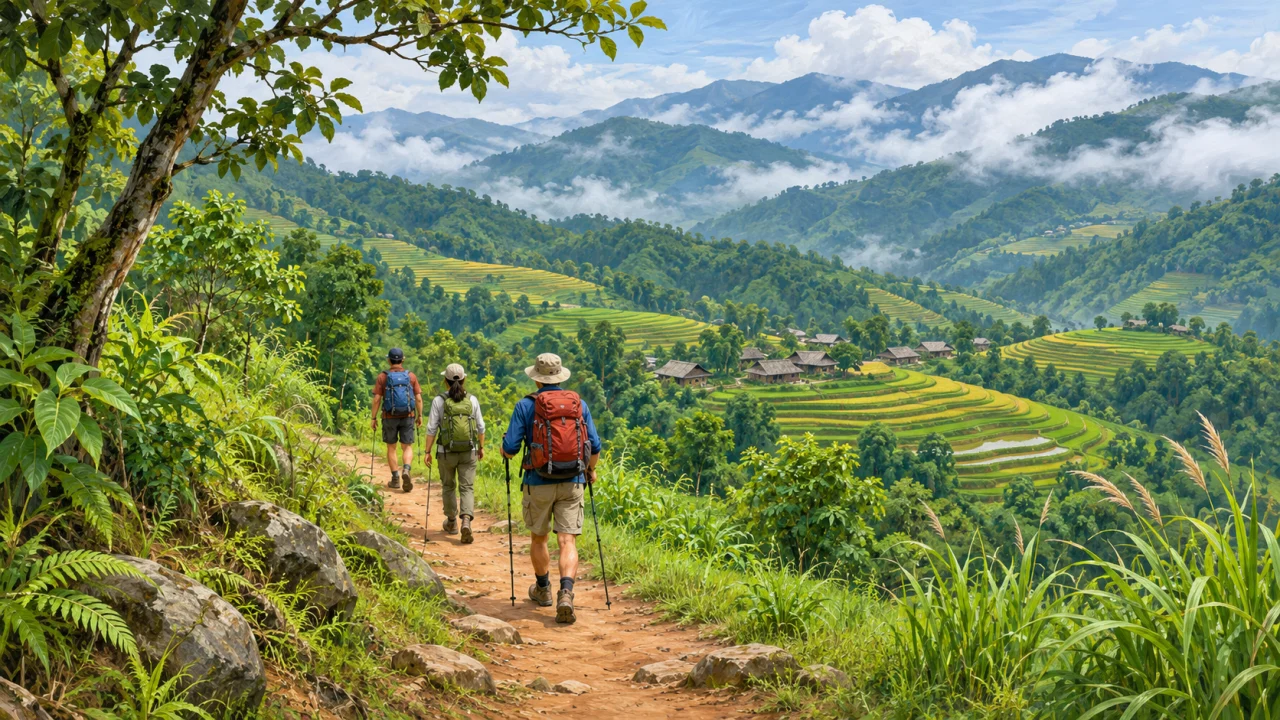
AI-generated illustration of a trekking landscape in Vietnam.
Trekking in Vietnam can take you through rice-growing valleys, humid forests and mountain landscapes with overnight stays along the way. To choose a route, start with the days you have available, the walking you are comfortable doing and the place you will travel from. Those decisions make it much easier to understand the destinations you encounter.
A village walk, a forest hike and a summit trek can each fill a memorable day. They also ask different things of your legs, your packing and your travel schedule. This guide explains how to compare them, with particular attention to mountain trips departing from Hanoi.
What kinds of hikes can you do in Vietnam?
Village and rice-terrace walks combine walking with time in rural communities and farming landscapes. Sa Pa and Pu Luong offer examples of these experiences. The route you choose determines how long you walk, how much climbing it involves and whether you stay overnight. Vietnam’s official tourism guides introduce the landscapes and village-based activities in both areas. Sa Pa · Pu Luong
Forest hikes put more of the day beneath tree cover. National parks offer different combinations of walking routes, wildlife experiences and accommodation. Compare the particular path and its access arrangements when planning a visit. Vietnam Tourism’s national park guide
Summit treks build the itinerary around reaching a mountain top. Expect to consider the ascent, descent and overnight arrangements together. A mountain hut partway along the route may divide the walking across two days.
Multi-day treks involve repeated days on foot. How well you recover overnight, carry your belongings and manage a descent matters throughout the trip. Read the full itinerary alongside any difficulty label.
Choose a trek by time, fitness and experience
Begin with your actual travel calendar. If you have a Friday evening through Sunday available, check when you must join the group and when you will return to the city. Leave time to get between your accommodation and the meeting point.
Then think about your recent walking experience. Being able to walk around a city all day gives you one useful reference. Walking uphill for several hours with a backpack, followed by a descent over uneven ground, provides a closer comparison for a mountain trek.
| Your starting point | What to look for in an itinerary |
|---|---|
| A free day within a longer holiday | Access time from your accommodation, walking hours and the return transfer |
| A weekend available from Hanoi | The evening departure, both overnight locations and the final return time |
| A first overnight walking trip | A clearly described trail, realistic daily walking hours and a packing list matched to the accommodation |
| Regular hill-walking experience | Total ascent, descent, terrain and consecutive days on foot |
| A strong interest in forests or rural life | How much time the route actually spends in that environment |
Choose two or three routes to compare closely. Read their daily programmes and ask about any part you cannot picture, such as a motorbike transfer to the trailhead or a shared sleeping area at a hut. These details help you prepare for the trip you are booking.
Where to go hiking in Vietnam
Northern mountains and rice terraces
Northern Vietnam gives you several ways to combine walking with mountain scenery. Sa Pa is a useful starting point for learning about village walks, terraced landscapes and the Hoang Lien Son mountains. Farther along your research, you will encounter summit destinations such as Lung Cung and Ky Quan San. Vietnam Tourism’s Sa Pa guide
Read the route description when a trip is associated with Mu Cang Chai. A walk through rice terraces and a trek towards the summit of Lung Cung have different schedules and physical demands. The region’s name alone gives you only part of the picture.
Central Vietnam’s forests and caves
Phong Nha-Ke Bang is one of the destinations Vietnam’s official tourism guide introduces for national park and cave experiences. Check how much walking, cave exploration and travel is included in the particular programme you choose. That combination affects the equipment and preparation you will need. Vietnam Tourism’s national park guide
Southern forests and national parks
Cat Tien is another destination covered in the official national park guide. Forest visits can fit into an itinerary with a different starting city and travel rhythm from the northern summit trips described here. Plan the park access and local stay alongside your walking day. Vietnam Tourism’s national park guide
The best hikes in Vietnam for your holiday will depend on those practical choices. Decide where walking fits into your wider journey before committing to a route that requires a long transfer.
Compare mountain treks from Hanoi
UpTrail’s priority summit routes give you a starting point for comparing northern mountain experiences. The difficulty ratings below use UpTrail’s own five-point scale for its current itineraries. Read them together with the daily walking programme.
| Route | What the itinerary focuses on | Walking programme | UpTrail difficulty |
|---|---|---|---|
| Lung Cung | Forest, streams and a summit reached via the Tu Le area | Two days within a two-day, two-night trip | 2/5 |
| Samu U Bo | A forest-led mountain itinerary in the Bac Yen area | Two days within a two-day, two-night trip | 3/5 |
| Phu Sa Phin | A summit route linked with the Xim Vang area | Two days within a two-day, two-night trip | 3/5 |
| Ta Chi Nhu via Tram Tau | An ascent beginning through the Mo Chi approach | Two days within a two-day, two-night trip | 3/5 |
| Ky Quan San | A longer summit programme in the Bat Xat area | Three trekking days, with an evening departure beforehand | 4/5 |
The current Vietnamese tour pages provide the route programmes and difficulty labels. Open the itinerary for the trip you are considering to check its departure, accommodation and return arrangements. Lung Cung · Samu U Bo · Phu Sa Phin · Ta Chi Nhu · Ky Quan San
Plan your trek before you travel
Allow for the journey to the trailhead
An itinerary can begin the evening before the first walking day. For example, UpTrail’s Lung Cung programme starts with a departure from Hanoi at 18:00, followed by the journey to Tu Le and a homestay night. The two walking days follow, with a mountain-hut night between them. Lung Cung itinerary
This affects the rest of your holiday. If you arrive in Hanoi on the day of departure, you need enough time to reach the meeting point and prepare your trekking bag. After the trek, allow time for the road journey back when planning your next hotel, train or flight.
Understand Day 0
Day 0 is the initial travel evening in an itinerary that numbers the first trekking day as Day 1. Read it as part of the full programme. Check where you sleep that night and which meals or transfers are included.
For Lung Cung, two days and two nights includes the homestay night before walking and the hut night on the mountain. Other routes have their own sequence of travel and accommodation. Compare the actual overnight stops when looking at tours from different operators.
Match preparation to the route
Read the equipment list for the trail and overnight accommodation you have chosen. Check which items are provided, what you carry yourself and how to protect a dry change of clothes. If you plan to use porter support, agree on the arrangement and bag allowance before departure.
When choosing travel dates, read the route’s seasonal information alongside its current departure programme. Ask the organiser about conditions on that particular route close to departure. Your itinerary and packing should reflect where you are going and the time you will spend on the trail.
What to check before you book
Once you have a shortlist, check the following details for the departure you want.
- Meeting point and transfers. Know where the group starts, the time you must arrive and whether the approach includes a motorbike transfer.
- Walking and sleeping arrangements. Check daily walking hours, shared rooms, mountain huts and what bedding is provided.
- Guide communication. Tell the organiser which language you need and confirm the available guide arrangement before booking.
- Meals and drinking water. Read the inclusions for your specific route and raise dietary requirements in advance.
- Personal equipment and porter support. Check what is supplied, any optional rental and the belongings you will carry.
- Price for your selection. Choose the date, number of guests and any extra services before checking the final booking price.
If you are researching from Australia, Europe or elsewhere in Asia, these same details help you fit a trek into your Vietnam visit. If you are already in Hanoi, they help you decide which departure works with the time you have left.
Frequently asked questions
Can I go trekking in Vietnam as a beginner?
Start with your recent walking experience and a clearly described route. Compare ascent, daily walking time, terrain and overnight conditions. Tell the organiser about your experience so they can help you assess a suitable programme.
Do all northern treks start in Hanoi?
Check the meeting point on the specific itinerary. The UpTrail programmes introduced here depart from Hanoi and continue by road towards their walking routes. A tour sold locally in a destination may have a different starting point.
How many days should I allow for an overnight trek?
Count the evening departure and the journey back as well as the trekking days. A two-day walking itinerary may start on the previous evening. Check the overnight stops and return time before arranging onward travel.
How do I choose a peak when I do not know the names?
Choose the time you can commit, the type of scenery you want and a realistic level of physical effort. Use those criteria to narrow down the routes, then read the itinerary for each peak.
To explore UpTrail’s current routes, open the Vietnamese tour list and compare their programmes. Tell the team your available dates, walking experience and preferred language when asking which trip fits. Explore UpTrail’s trekking tours