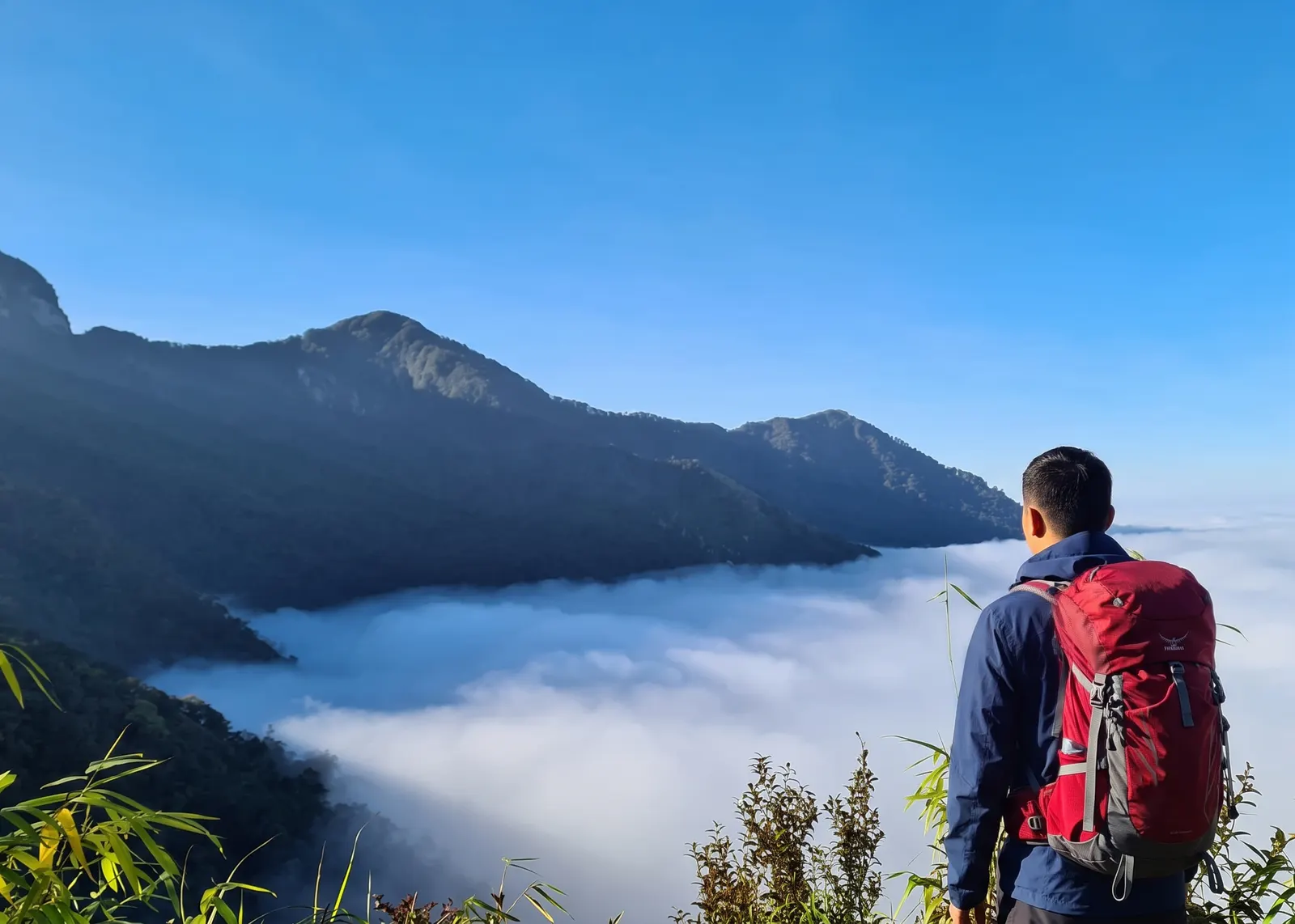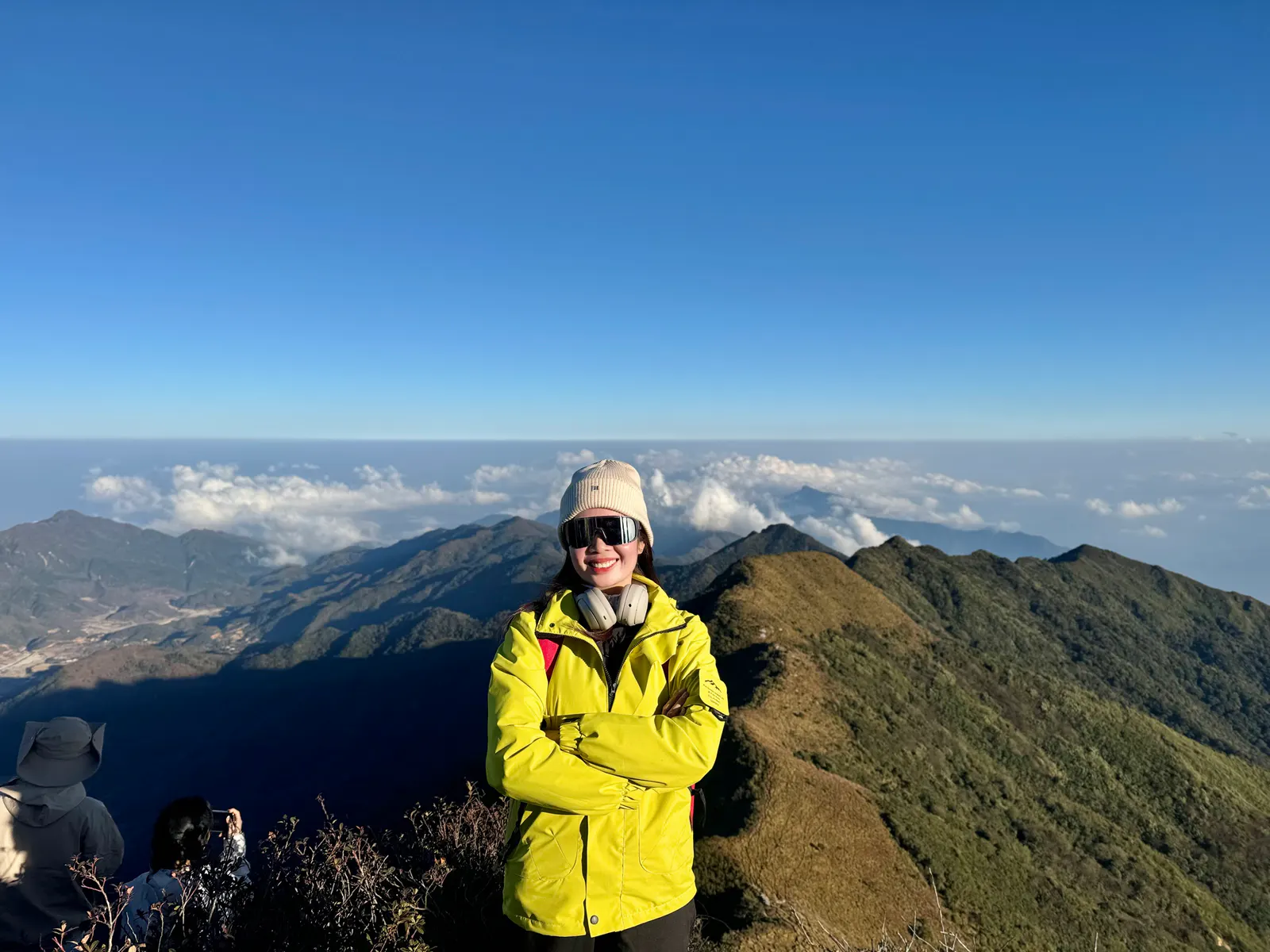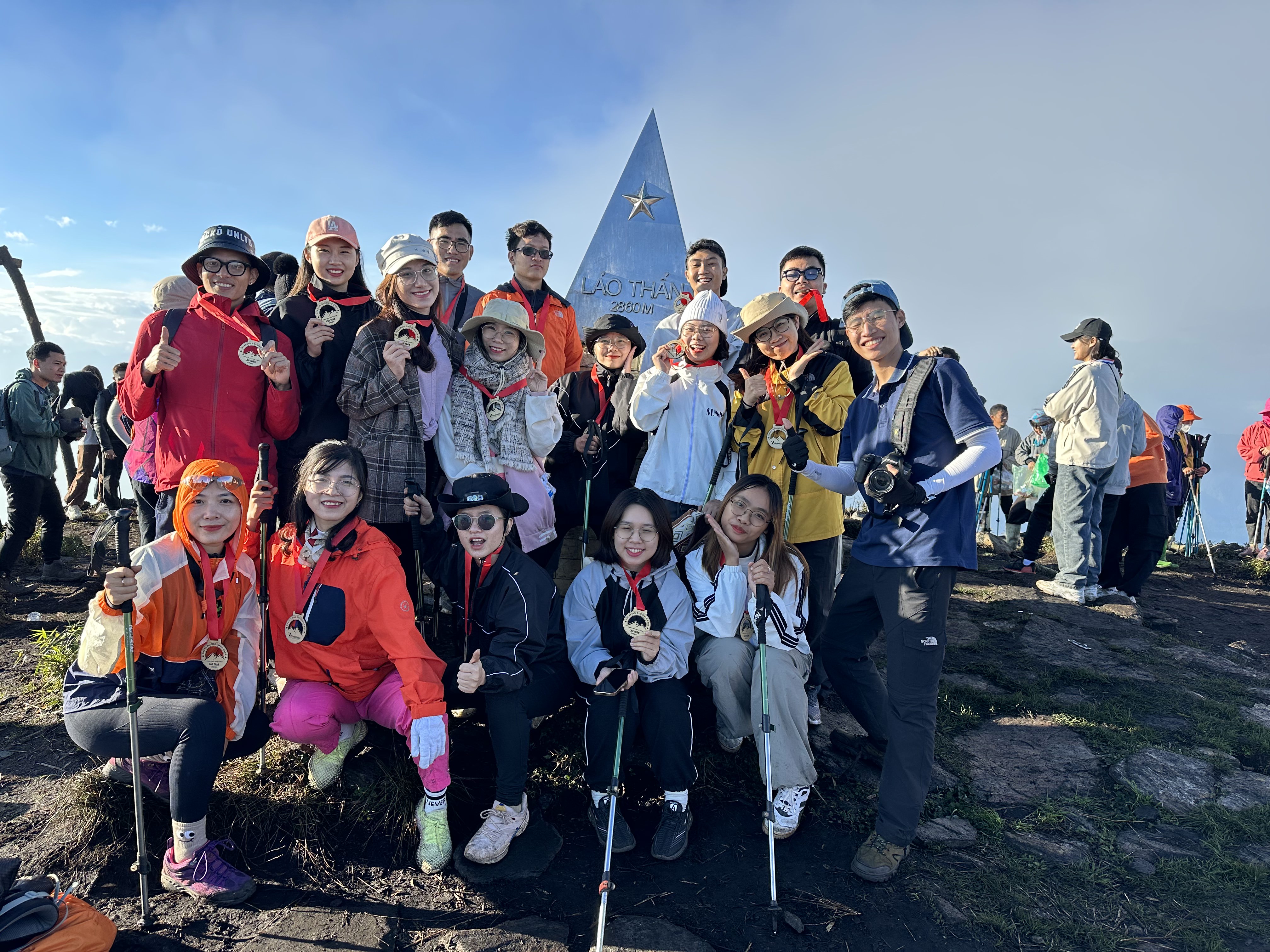
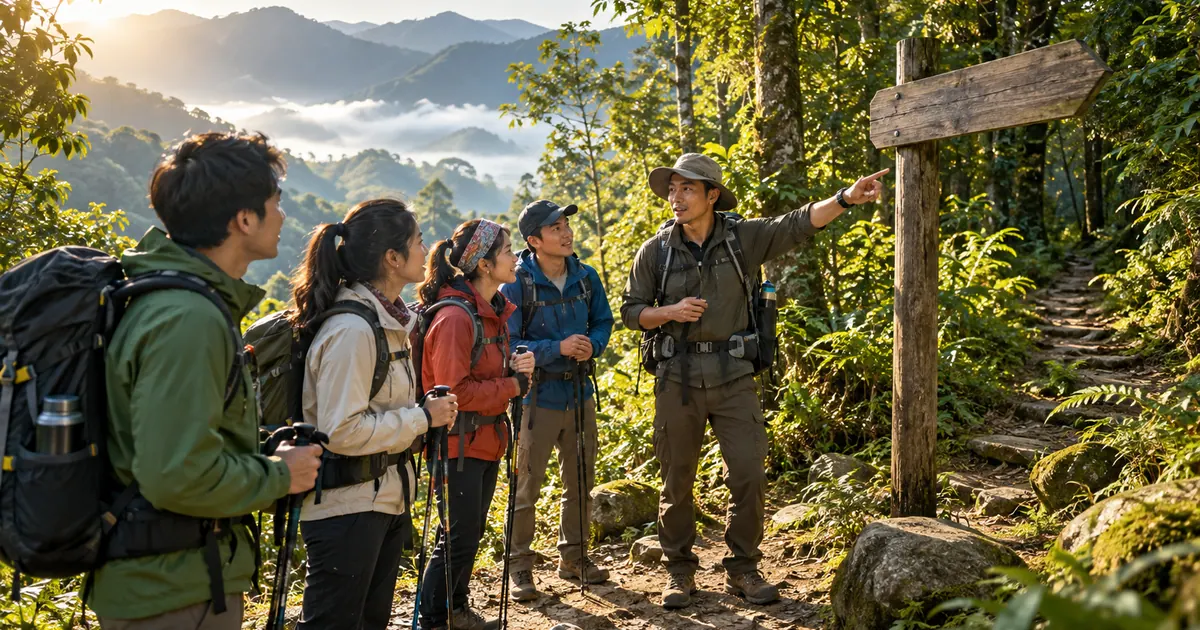
Illustration for this trekking planning guide.
Choose a trekking tour in Vietnam by checking the exact route, daily effort, guide arrangements, included services and booking terms. Compare price after those details match your needs. A summit photograph and a difficulty badge cannot explain the whole trip.
Begin with your available dates, recent activity, experience on hills and preferred language. Share these with the organiser so that the discussion starts with a suitable itinerary.
Identify the route behind the mountain name
Two programmes for the same mountain can use different approaches, overnight stops and walking stages. Read the starting village or trailhead, the number of walking days and the longest stage. Include the evening journey labelled Day 0.
For example, read the approach and timings in the Ta Chi Nhu programme rather than treating every itinerary bearing that mountain name as the same product. Keep a copy of the route offered for your chosen date.
Check the demands of each day
Look for ascent and descent, trail conditions, estimated time on the route, personal load and overnight accommodation. A shorter itinerary can still have a demanding summit day or descent.
Reading trekking difficulty explains how these factors fit together. If you are comparing your first trips, use the beginner route guide and describe what you can currently do rather than saying only that you are fit.
Find out who coordinates the group
Ask who will send the departure instructions, who will lead on the route and how the group communicates if people walk at different speeds. A guide, tour leader and porter may perform different tasks, even where one person carries out more than one role.
Team profiles introduce people associated with UpTrail. The person assigned to a particular departure needs confirmation. Neither a team photograph nor a job title establishes the guide-to-guest ratio or language support for your trip.
| Ask about | Confirm before booking |
|---|---|
| Pickup and transport | Meeting location, departure time and the arrangement applying to your date |
| Overnight stops | Where you sleep, shared facilities and any essential personal needs |
| Porter support | Included allowance, extra support and when luggage is accessible |
| Food and water | Included meals, water arrangements and whether dietary needs can be met |
| Equipment and insurance | Items supplied, items you bring and the stated coverage conditions |
| Changes | Who communicates route decisions and which booking terms apply |
Compare services before comparing the price
Read the inclusion checklist and list anything you must arrange separately. Compare the selected departure, number of travellers and extras, rather than relying on a card showing a starting price.
Keep important answers with the quote or booking confirmation. If a page and a message disagree, ask which arrangement applies before paying. Read the payment, cancellation and date-change terms while you can still decide whether they suit your plans.
Ask the questions that affect your decision first
A useful enquiry states your dates, group size, least experienced participant, recent activity and any essential transport, food or sleeping needs. Ask about route eligibility and language support at the same time. Smaller packing details can follow once the route is selected.
Should I choose the cheapest tour?
Compare total cost on the same service scope, then decide whether the route and support suit you. A lower price alone does not answer those questions.
Does choosing a good organiser make every route suitable?
The route still needs to match your abilities and preparation. Discuss a different date or programme if the walking requirements do not fit your current experience.
Review the tour programmes and send UpTrail your trip requirements before choosing a departure.