Illustration for this trekking conditions guide.
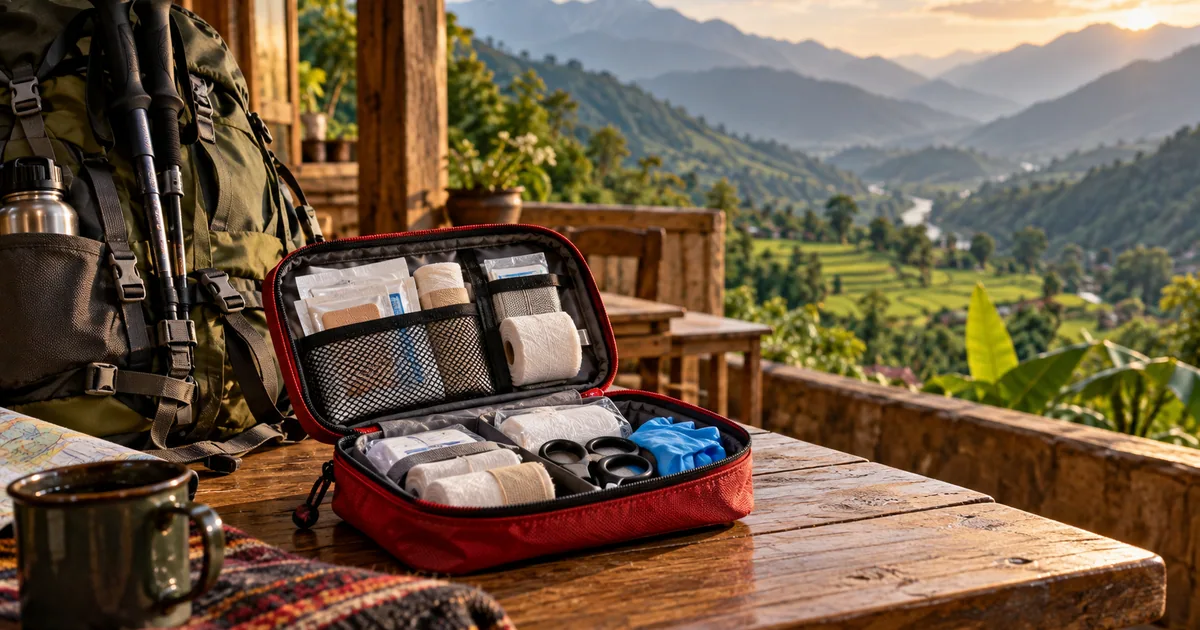
Prepare a trekking first aid kit by separating personal needs from the group’s equipment. Know what you carry, where it is, its condition and whom to contact for support. A list of supplies does not replace first aid training or medical assessment.
This article does not prescribe medication, doses or procedures. Choose personal health items with appropriate professional advice and the practical demands of the trip in mind.
Distinguish the personal kit from the group kit
Personal supplies relate to your own needs and access during the stage. Group equipment is organised around the programme and the people responsible for using it.
A listed kit does not establish that a medical professional accompanies the trip or that every incident can be managed. Read the inclusions and ask who handles concerns, instead of interpreting a leader title or kit photograph as evidence of qualifications.
| Group of needs | Question before departure |
|---|---|
| Basic supplies | What does the team provide and what personal items are needed? |
| Protection and hygiene | Which items fit the use you have been taught? |
| Existing medication | How do you follow personal instructions and storage requirements? |
| Health information | Who receives relevant information and how is privacy handled? |
| Urgent support | What communication arrangements and limitations apply? |
Keep medication decisions individual
If using prescribed medication, prepare under the instructions of the professional treating you. Follow storage requirements. Do not share it with another person because symptoms appear similar.
Tell the organiser in advance about relevant allergies or conditions affecting the trip. Use the appropriate contact for necessary support information rather than sharing sensitive details in a large group.
The article cannot decide whether you can participate. Seek individual assessment when that is needed.
Check condition and practical access
Protect items from moisture and damage while keeping them accessible. A complete kit deep in luggage that has already gone ahead may not meet the intended access arrangement.
Check labels, expiry dates and packaging. Do not keep a damaged item just to complete a checklist. The final-day check confirms these preparations rather than introducing a new selection of medication.
Know when and whom to tell
Report a problem early and describe the situation to the responsible person. Follow appropriate support rather than continuing because the summit seems close or your own supplies appear extensive.
For a remote route such as Nam Kang Ho Tao, ask about support limitations. An estimated access time is not a guaranteed rescue arrival time.
Does the group kit replace my personal needs?
Confirm the division. Your existing medication and health information are not automatically contained in the group’s arrangement.
Can a checklist teach first aid techniques?
Use appropriate training for techniques. Also prepare group communication and personal requirements where relevant.
For healthcare-professional guidance on personalising kits to the traveller and itinerary, see CDC Yellow Book’s travel health kit chapter.