Illustration for this trekking preparation guide.
Choose food to bring trekking around the meals supplied, time between stops and your personal needs. For additional snacks, favour familiar items that are easy to carry, access and store appropriately. This is a trip-planning checklist, not a diet for every walker.
Separate included meals from personal food
Read the programme’s inclusions and mark each organised meal. If there is an evening transfer, ask about food before departure and at the arrival stop. Meals outside the stated programme are not automatically included.
Personal food can cover gaps between meals or specific needs. Do not plan to replace all organised meals without discussing how that would work. For several walking days, check each stage rather than multiplying the snacks from one short outing.
| Selection check | Question |
|---|---|
| Familiarity | Have you used it during activity and found it suitable? |
| Access | Can you open and eat it at a stop without unpacking everything? |
| Storage | Does it require cooling or another condition you can provide? |
| Packaging | Can you contain and carry out the waste? |
| Quantity | Does it fit the actual intervals and your needs? |
Pick foods you know and can store
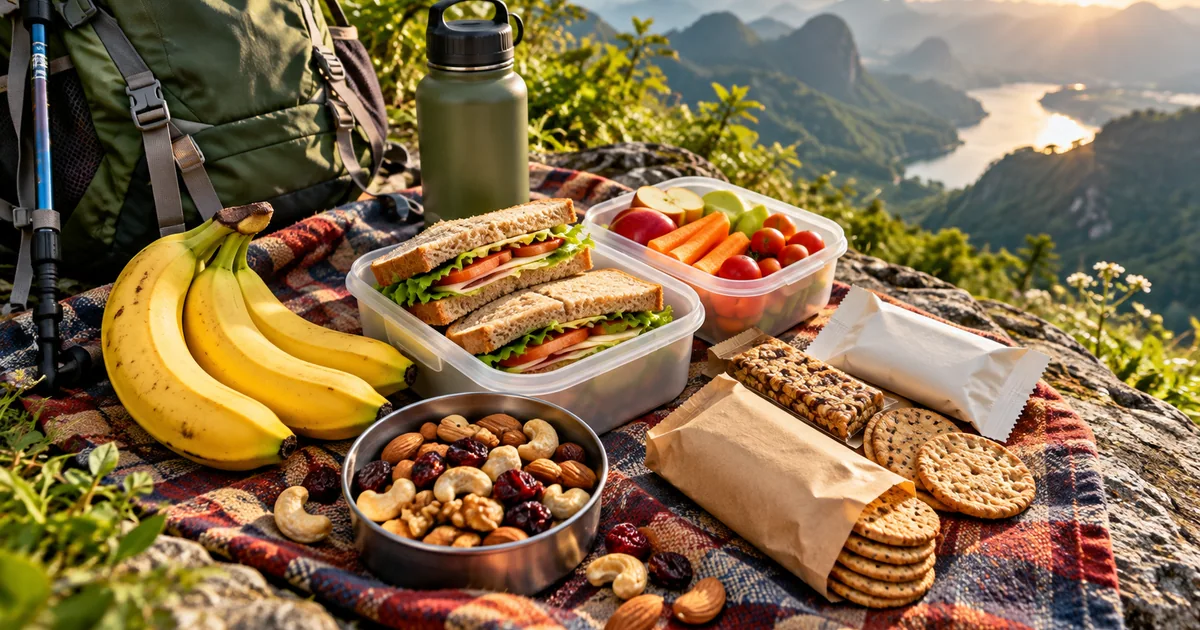
Biscuits, nuts or suitable dried foods are examples to consider, not a universal menu. Check ingredients, expiry dates and storage instructions. A product familiar to someone else can contain an ingredient you cannot eat.
A long mountain stage is an inconvenient setting for the first trial of unfamiliar food. Choose something you already tolerate and can use with the planned rest schedule.
Pack by the day and the point of use
Keep the current stage’s snacks accessible. Food for later days can be stored separately, but confirm access if some luggage goes ahead with a porter. Do not put everything in a bag unavailable until evening.
Use suitable stops to eat. Avoid opening packaging while negotiating a difficult section. If you cannot manage the planned meal timing, tell the leader rather than silently changing the arrangement.
Plan food alongside the confirmed drinking-water arrangements. Natural water is not automatically safe to drink. Ask where and when the group replenishes water rather than assuming a nearby stream meets that need.
Raise dietary needs before the trip
Explain vegetarian requirements, allergies or other essential restrictions early enough for the organiser to assess the logistics. For an allergy, ask about preparation and contact with relevant ingredients. A general request for a different meal does not establish that all requirements can be met.
If your diet relates to a health condition or medication, follow advice from the professional supporting you and share the relevant practical requirements with the organiser.
Check before packing
- Mark the meals already included.
- Identify intervals needing personal food.
- Check familiar products, labels and storage.
- Separate today’s food from later supplies.
- Prepare a rubbish bag.
- Confirm the team has received essential dietary information.
Combine the full packing list with the last-day checks and your Lung Cung programme if applicable.
For general storage and food-safety considerations when packing, see Academy of Nutrition and Dietetics’ hiking food guide.