Illustration for this trekking equipment guide.
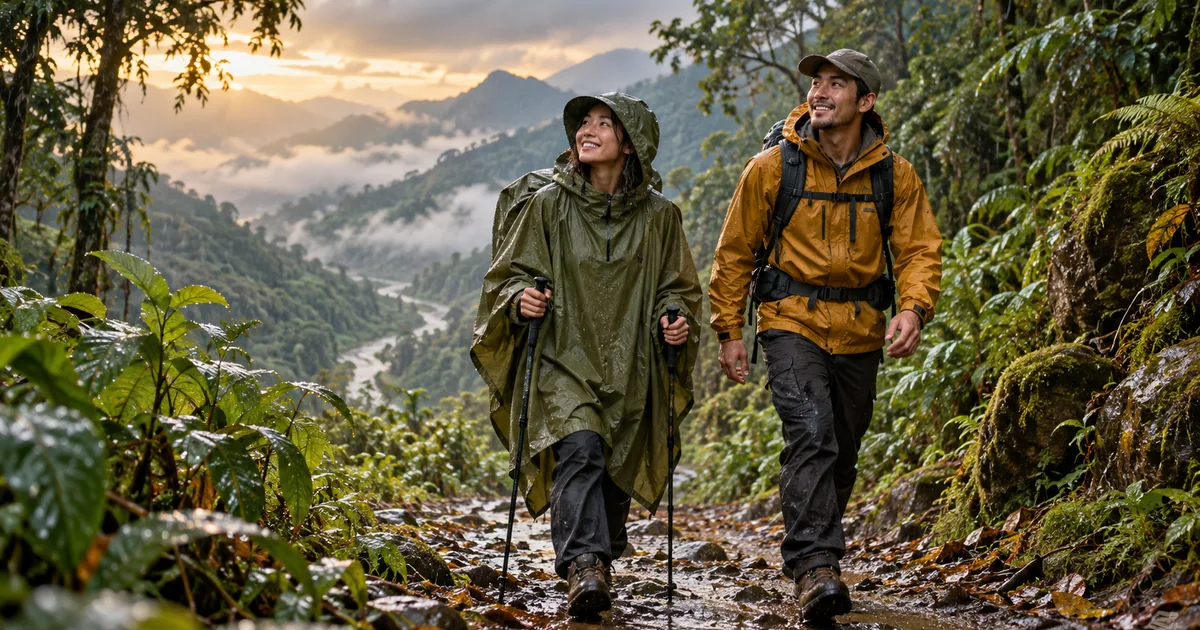
Choose a hiking poncho or rain jacket by coverage, wind, terrain and how it works with your backpack. A poncho may cover a wider area, depending on the model. A jacket is more closely fitted but does not automatically protect your luggage.
Neither option makes every item dry in every condition. Compare the actual design, fit and condition rather than choosing from the product name alone.
Compare the functions you need
| Consideration | Poncho | Rain jacket |
|---|---|---|
| Coverage | Some designs also cover part of the pack | Coverage follows the jacket’s cut |
| Loose material | Check how it behaves in wind or narrow passages | Usually more contained around the body |
| Movement | Try with your pack and poles | Check sleeves, hood and room for layers |
| Ventilation | Depends on material, opening and use | Depends on fabric, vents and layers |
| Luggage | Still requires appropriate internal protection | Needs a separate pack-protection arrangement |
Check wind, branches and narrow trail sections
Test whether a loose garment obscures your view or catches on equipment. Do not secure it in a way that prevents you from using your hands where the route requires them.
A jacket must also allow movement with a loaded pack and the layers beneath it. A tight hood or sleeve can make equipment harder to use. At difficult sections, follow the guide’s instructions rather than relying on clothing to compensate for the conditions.
Protect your equipment separately
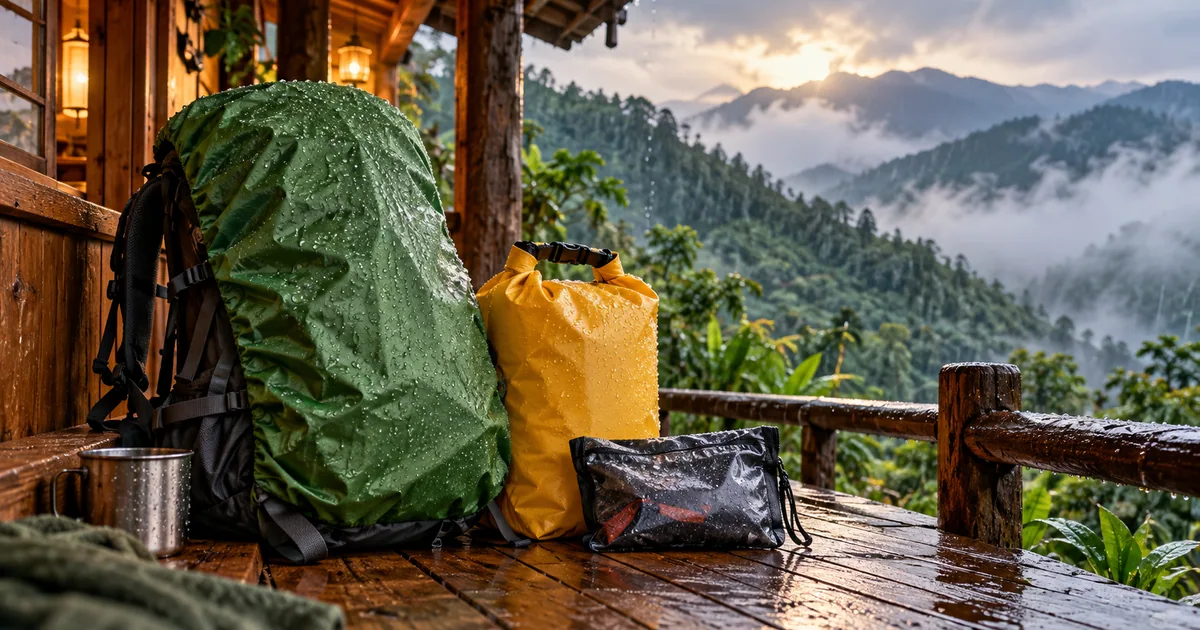
Rain can reach a bag through an uncovered area, an opening or a displaced cover. Sleeping equipment, spare clothing, documents and electronics need protection appropriate to the items and the product’s limits.
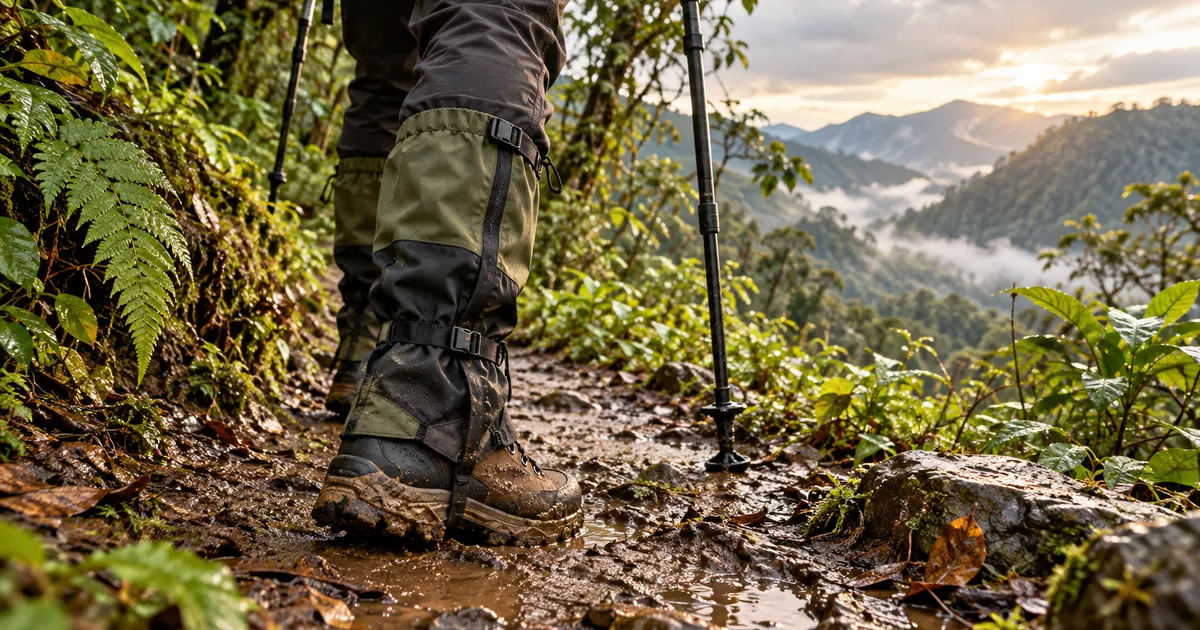
Read how to protect the inside of a pack. A broad poncho is not a reason to remove every internal layer of protection. Gaiters also have a defined coverage area rather than making an entire outfit watertight.
Practise the complete arrangement
- Wear the pack with a realistic load.
- Adjust the hood and move your arms.
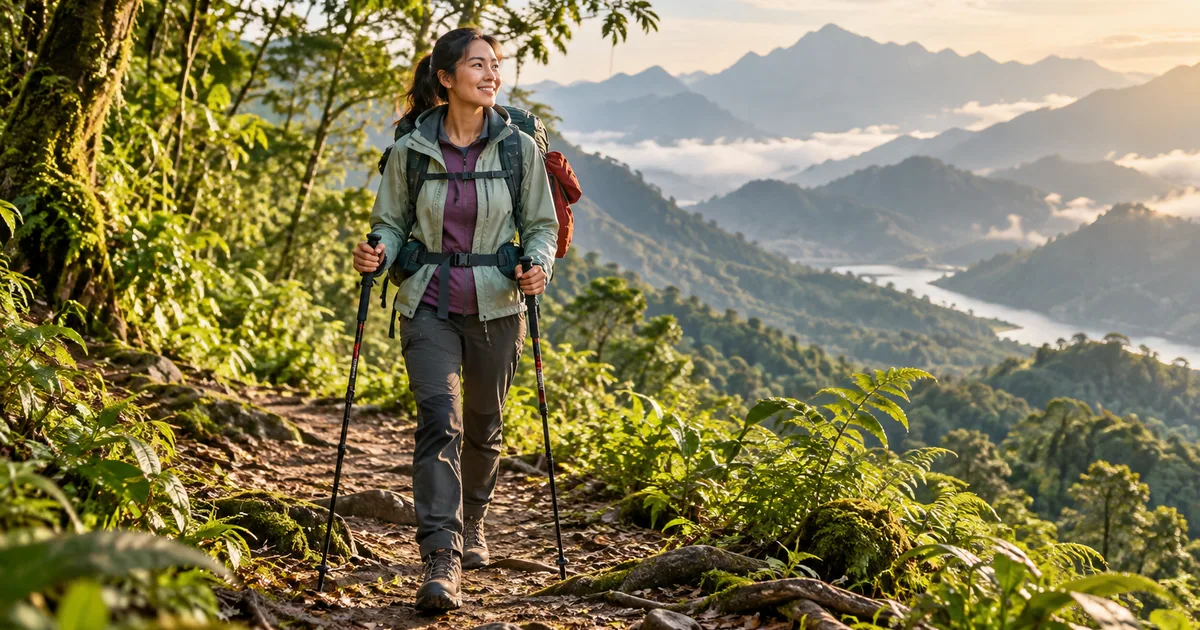
- Try reaching water and handling poles.
- Turn and step in a controlled space.
- Practise removing the wet layer without soaking dry items.
- Check care instructions and the condition of borrowed equipment.
Some UpTrail programmes include rainwear. Confirm what is supplied and whether it meets your needs before buying an additional item. Combine the choice with your clothing layers and the selected Ta Lien Son programme if applicable.
Does expensive rainwear permit trekking in any weather?
Route conditions and the leader’s decisions still govern the programme. Equipment does not establish that continuing is appropriate.
For the difference between water-resistant and waterproof/breathable garments, see REI’s rainwear guide.