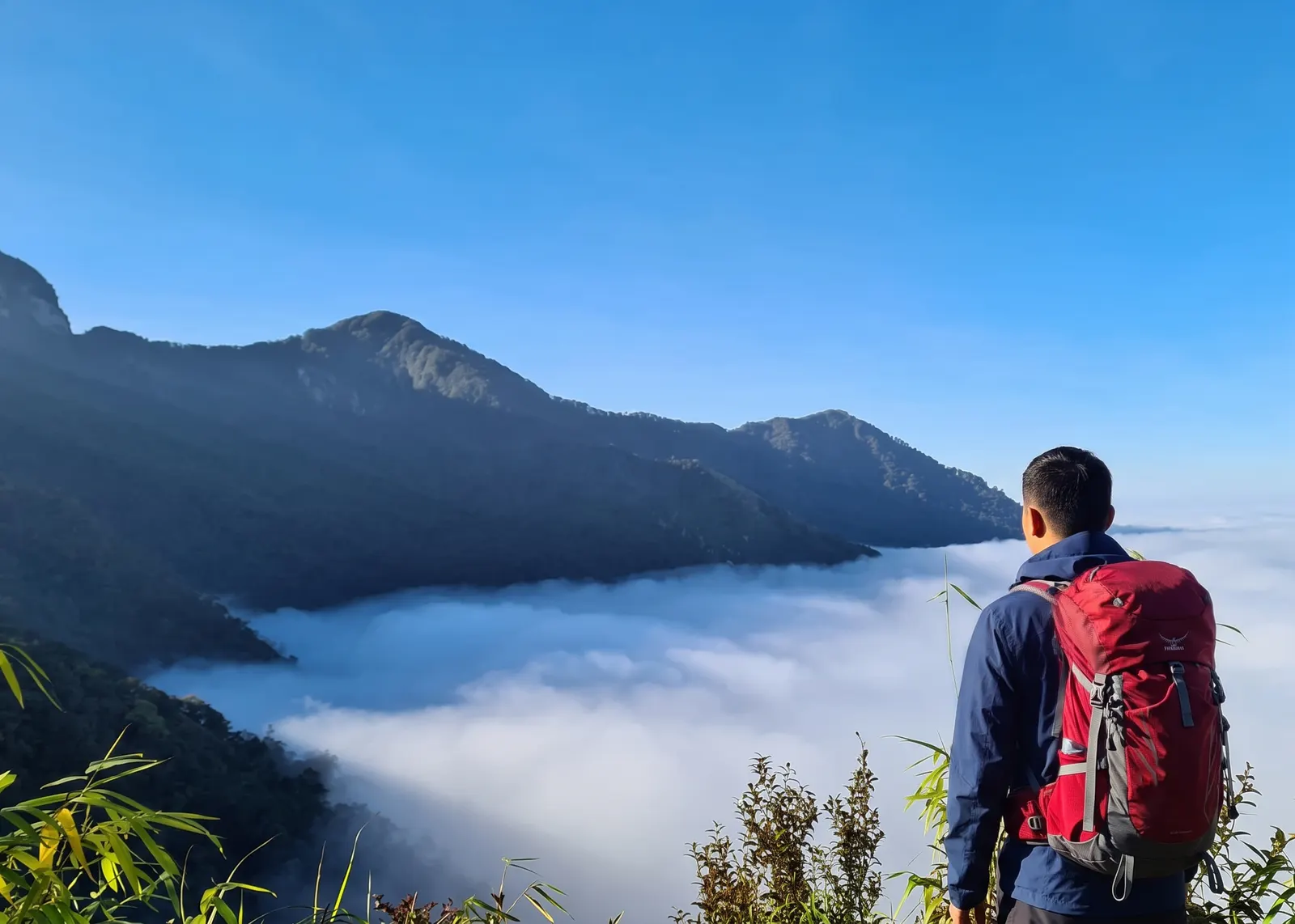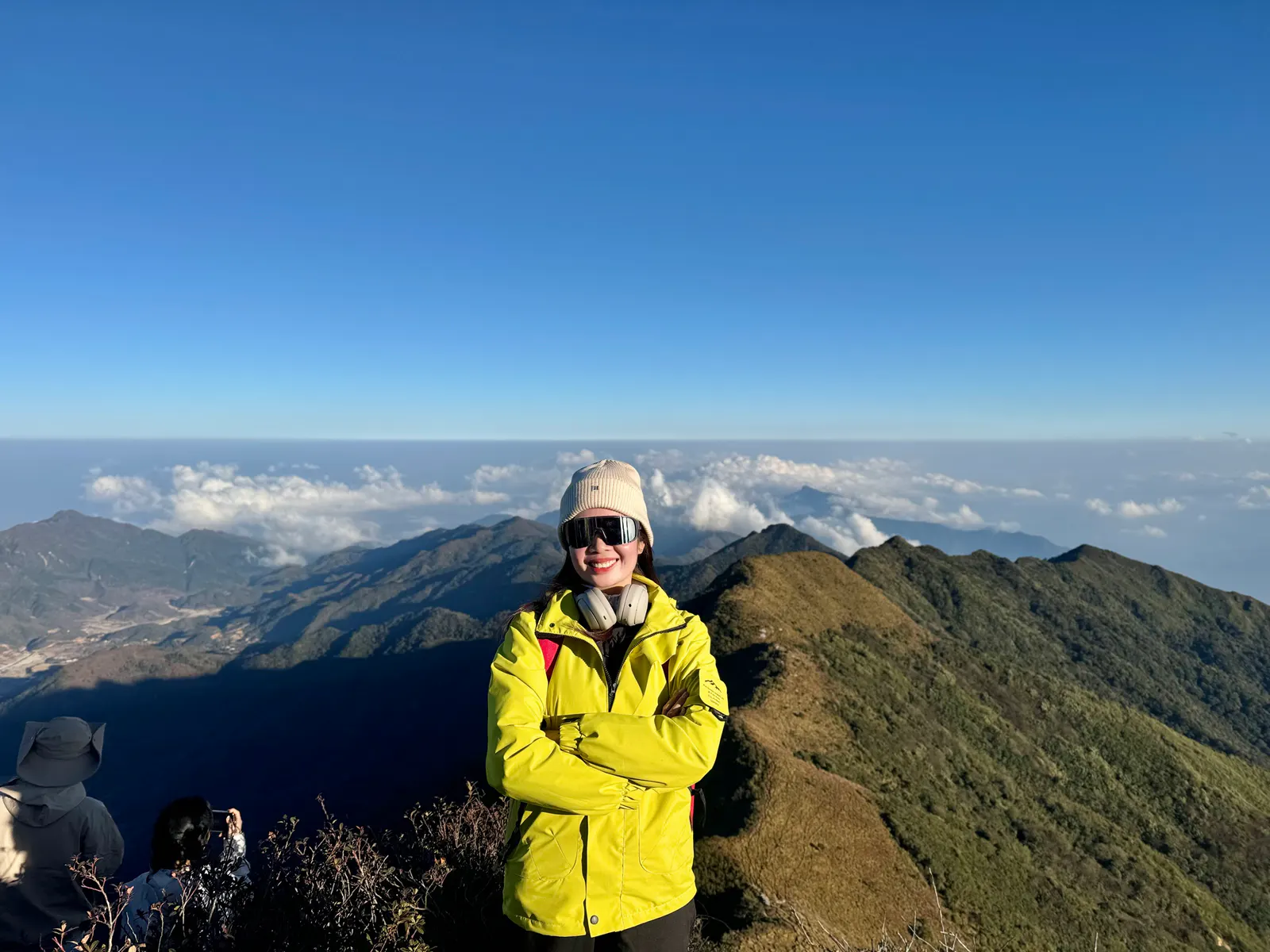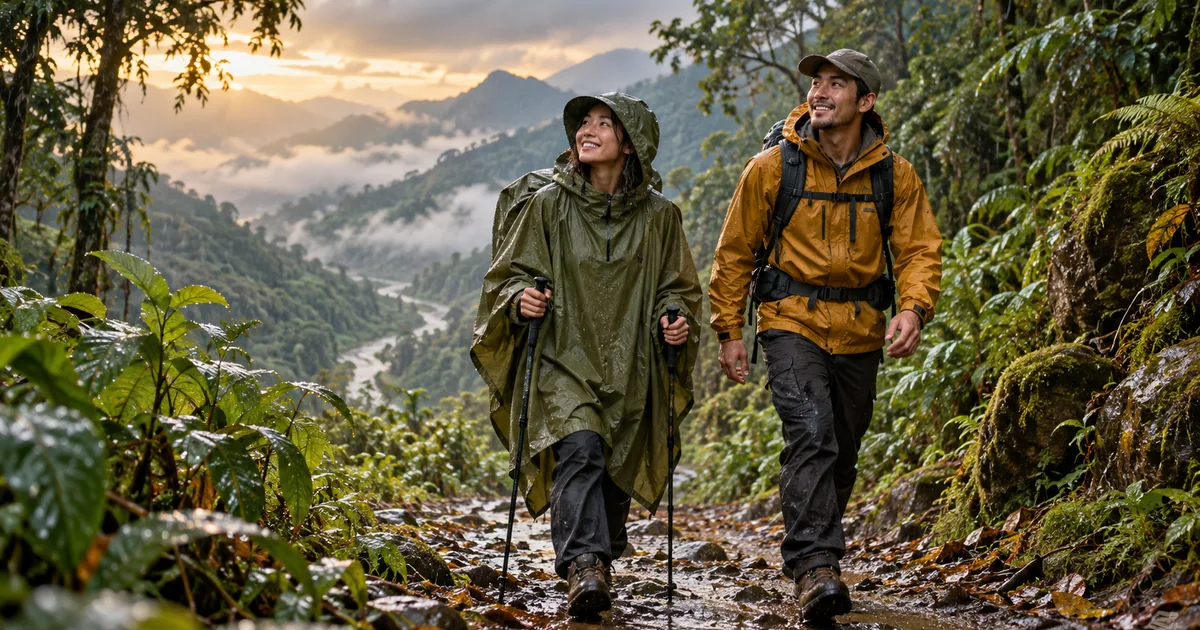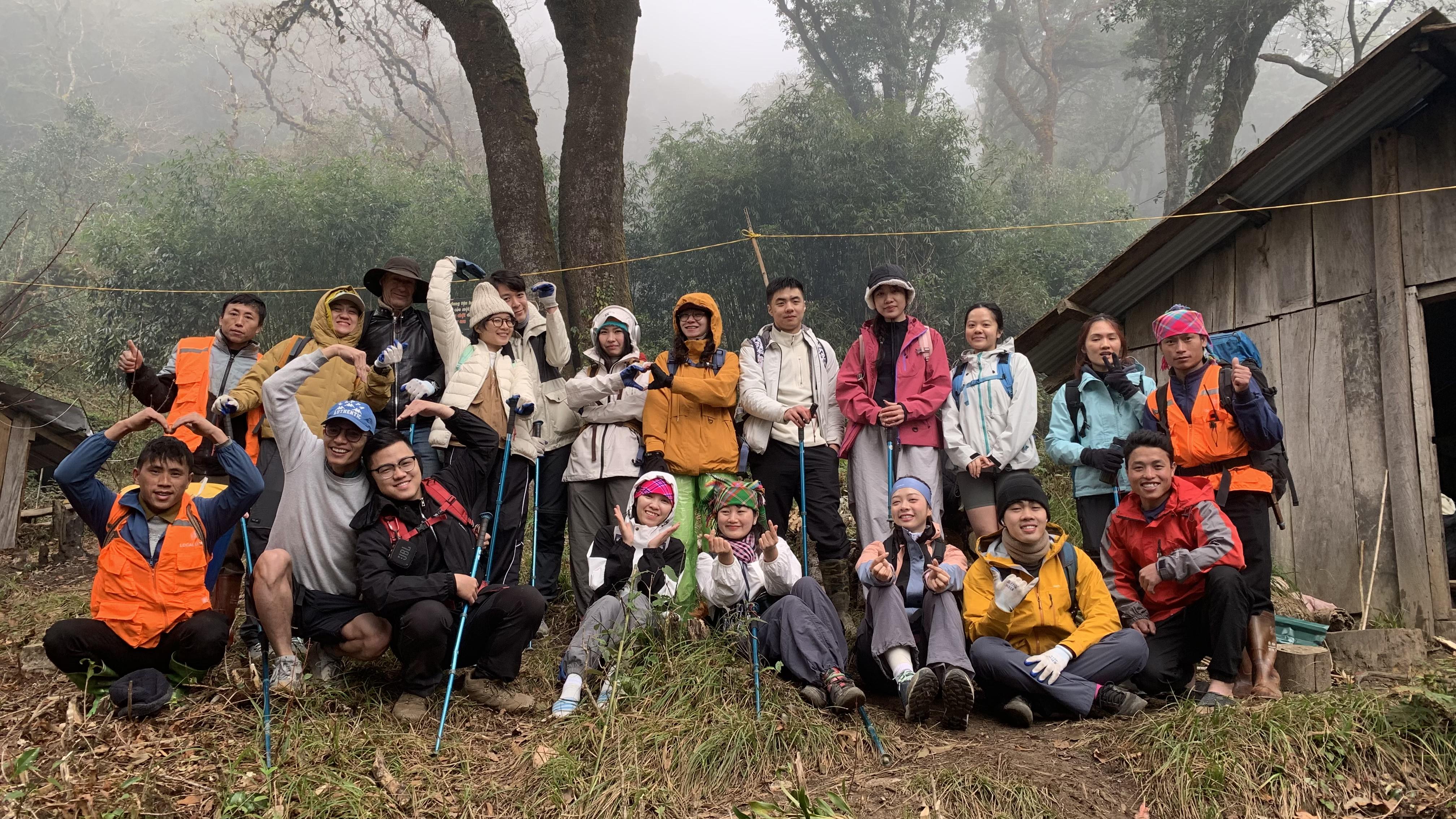

Illustration for this trekking equipment guide.
Choose what to wear trekking in Vietnam from the weather, your activity and the overnight arrangements. Layers let you adjust as walking warms you up or a stop changes how you feel. Keep a protected dry set for the evening as part of the same plan.
One very thick garment is not a complete clothing strategy. Read the route and ask about the higher stages rather than choosing solely from the temperature in the departure town.
Give each layer a job
| Clothing group | Purpose |
|---|---|
| Next-to-skin layer | Comfort during activity and moisture management |
| Insulating layer | Additional warmth when the conditions or rest stop require it |
| Outer layer | Wind and rain protection within the garment’s stated capabilities |
| Protected spare clothing | A dry option for changing or the overnight stop |
You do not need to wear every layer continuously. Make adjustments at an appropriate stopping place and keep removed items secure and easy to find.
Distinguish walking from resting
Too much clothing during effort can leave you hot and damp, while a later stop changes your need for warmth. A layer near the top of your bag is more usable than one buried beneath the sleeping kit.
Check that trousers and tops allow comfortable steps, bending and arm movement. Wear them with the backpack you expect to use so you can find pressure points under straps or the hip belt.
Compare materials by the intended use, comfort and care instructions. An outdoor label alone does not establish that the garment works well for your needs.
Preserve the evening clothing
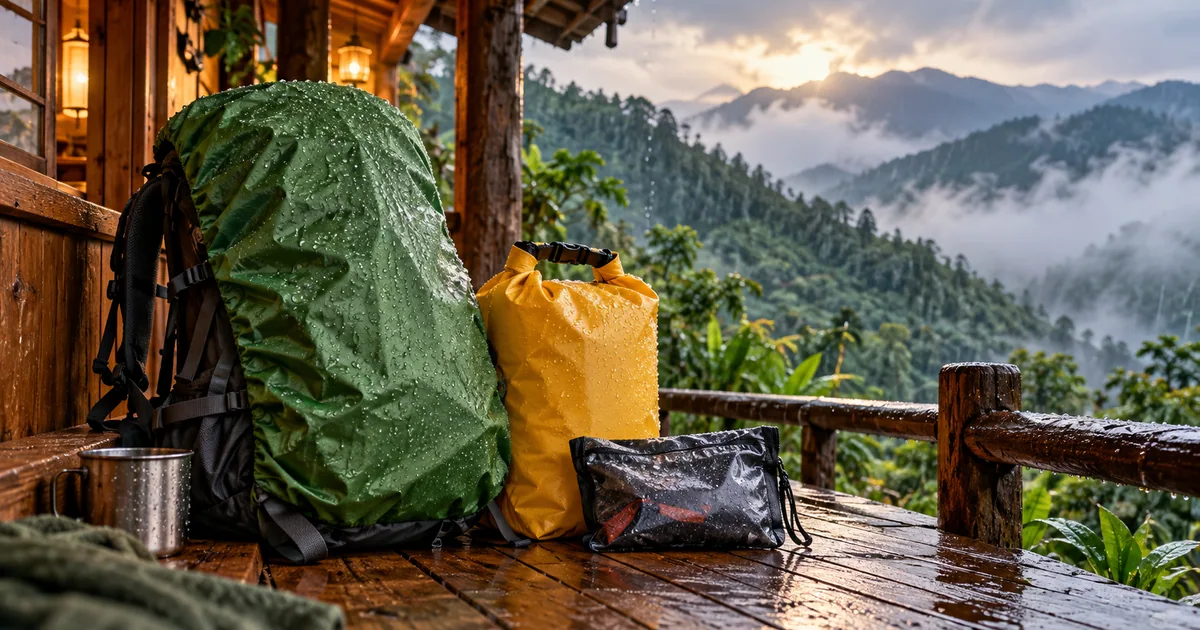
Keep sleeping clothing and spare layers protected inside the bag. A cover outside the pack cannot prevent every opening or movement from admitting moisture. Follow the dry-storage guide.
Ask about bedding at the overnight stop before reducing what you bring. Avoid using every protected spare item during the day and leaving no dry option if those clothes become wet.
Prepare for changing conditions
When warm during movement, adjust layers at a suitable stop. For wind or cooler stages, know which layer you need and where it is stored. For rain, try the poncho or jacket with your pack before the trip.
These choices need the actual programme and current instructions. Check Nhiu Co San separately if that is your route; the city forecast cannot describe every overnight location.
A clothing trial before departure
- Walk, sit, bend and raise your arms with the pack on.
- Check strap and belt contact points.
- Try the rain layer and reaching the insulating layer.
- Pack the dry evening set separately.
- Confirm route-specific requirements and remove unnecessary duplicates.
Can ordinary clothing work?
Assess flexibility, performance when damp and how it fits your layers. You do not necessarily need to replace every garment. Finish with the packing checklist.
REI explains the separate moisture, insulation and weather-protection functions of layers. See REI’s layering guide.