Illustration for this trekking equipment guide.
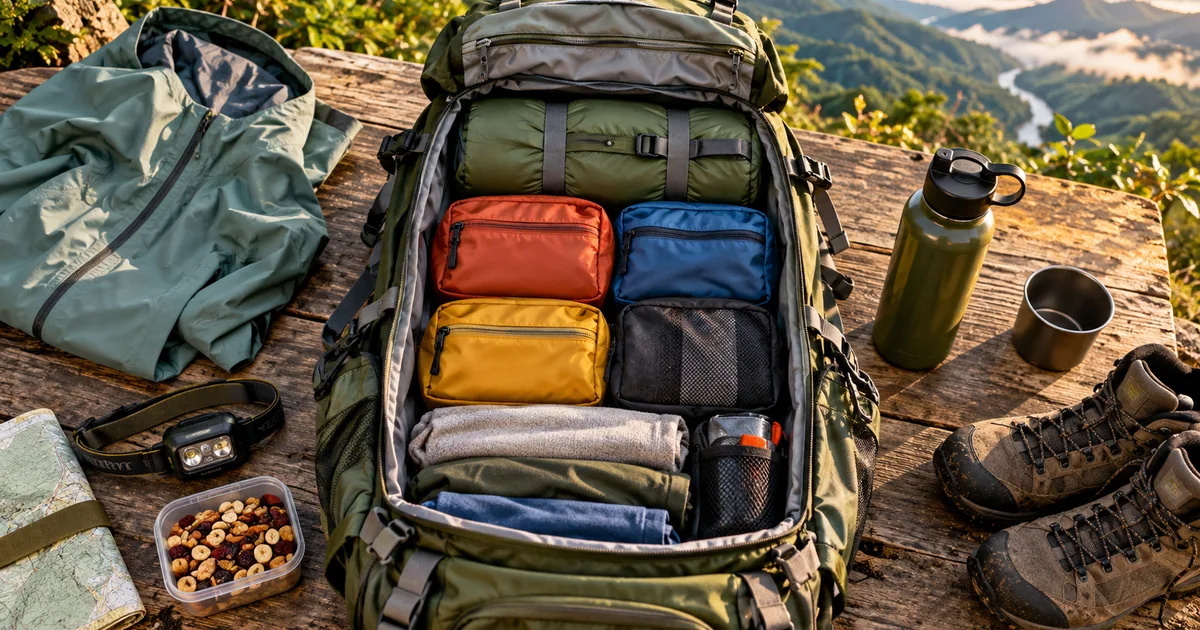
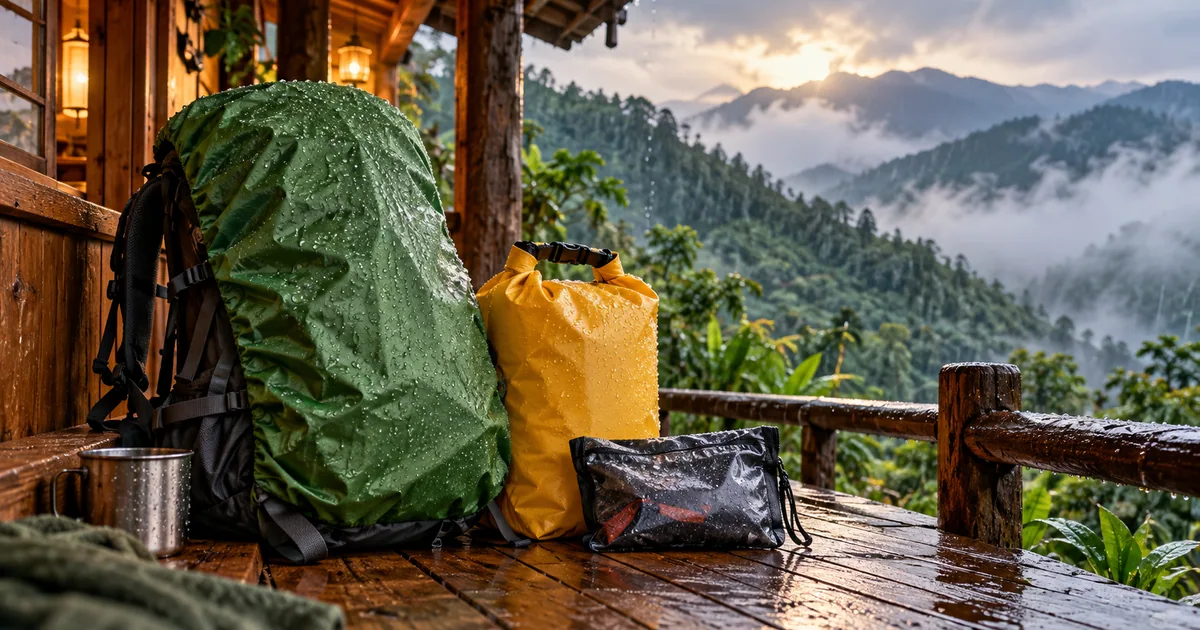
To protect a hiking backpack’s contents from rain, plan both the outer cover and the storage of important equipment inside. A rain cover can help, but openings, movement or uncovered areas can still admit moisture.
Prioritise sleeping equipment, dry clothing, documents and electronics. A pack described as water-resistant should not automatically be treated as watertight.
Understand the outer layer
Fabric, seams, zips and openings all affect the pack’s protection. A claim about the fabric does not describe every entry point in the finished backpack.
Check that the cover fits after packing and that its attachment works. Objects hanging outside can stop it covering the bag properly. Rainwear may cover you and part of the pack, depending on the design, while internal protection still has a separate job.
| Equipment group | Storage aim |
|---|---|
| Sleeping kit and spare layers | Preserve a usable dry set for the overnight stop |
| Phone and documents | Suitable protection while remaining accessible when needed |
| Food | Appropriate packaging and separation from dirty equipment |
| Already wet items | Prevent moisture spreading to the dry group |
| Trail essentials | Access without leaving the dry compartment open unnecessarily |
Check liners and dry storage before departure
Use suitable liners or dry bags according to the product’s instructions. Inspect closures and damage. A bag that appears sealed has not thereby been shown to withstand every wet condition.
If doing a controlled check, use unimportant substitute contents. Do not immerse valuable equipment to test a container. A simple home check may reveal a closure left open or a cover that is too small; it does not certify protection under submersion.
Arrange access before rain starts
Follow the packing layout guide so you can reach rain protection without opening the sleeping kit. Know where the cover and frequently used items are.
During the trip, follow the group’s instructions about an appropriate stopping place. Trying to unpack at a difficult section can distract from the terrain. Close storage after use and keep protected electronics use compatible with paying attention to the route.
Keep wet equipment separate afterwards
A damp towel or rain layer needs separate storage until it can be dealt with. Do not put it into the dry clothing group merely to organise all garments together.
At the overnight stop, check the protected evening kit before reorganising the bag. Ask about current conditions for Samu U Bo or another forest route rather than inferring them from an old photograph.
Is a pack cover enough on its own?
Consider the design, condition and exposure. Important items may need their own protection. Check the actual limits instead of expecting a cover to guarantee dryness.
Do dry bags remove the need for careful handling?
Correct closure, condition and use still matter. They also do not establish that continuing through any weather is appropriate. Follow the leader’s route decisions.
Complete the checklist and protect your sleep kit before departure.
REI discusses covers, liners and additional dry storage for vulnerable equipment. See REI’s wet-weather backpacking guide.