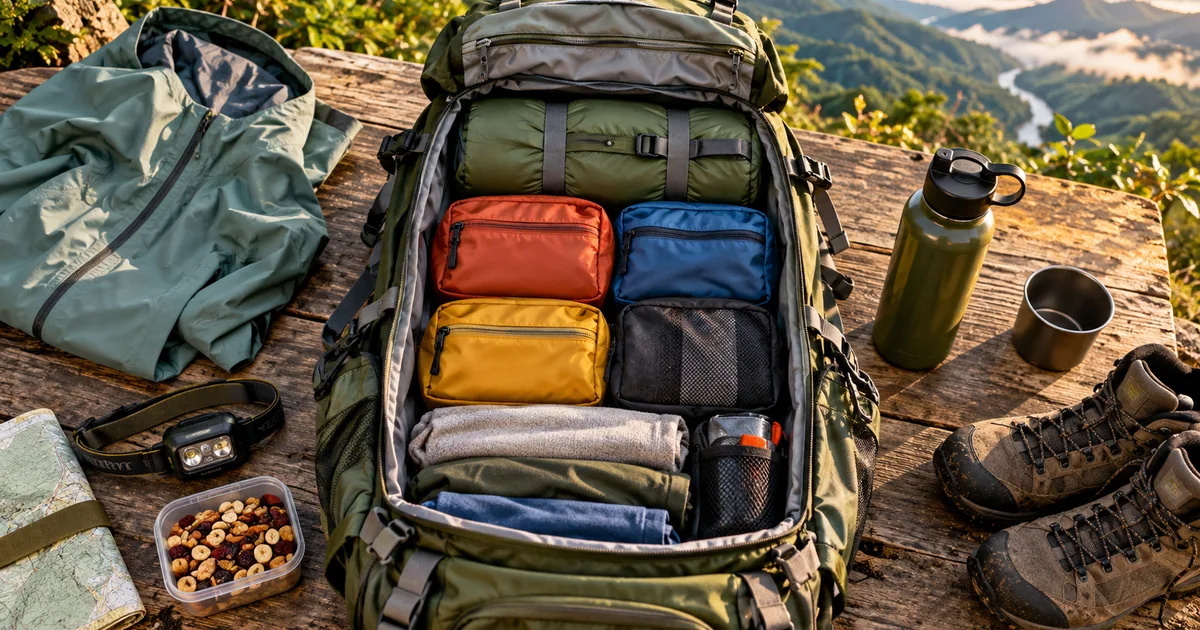
Illustration for this trekking equipment guide.
Pack a hiking backpack so the load stays stable, important items are accessible and dry equipment is protected. Fitting everything inside is only the beginning. You should know where each group of items is and be able to use them at a rest stop.
Divide equipment by when you use it
Make three groups: items needed on the trail, items used at the overnight stop and items used after the trek. The last group may stay in the vehicle if the organiser confirms that option.
Keep luggage assigned to porter support separate from your day bag. Confirm when you receive it again before handing over anything. A pack of the right capacity helps, but removing unnecessary items comes first.
| Packing function | Example group |
|---|---|
| Less frequently opened area | Protected sleeping or evening kit |
| Stable load area | Heavier items positioned for the pack’s design |
| Quick access | Rain layer, light and snacks needed on the stage |
| Dedicated location | Water and small personal essentials |
| Separate storage | Wet items and suitably wrapped rubbish |
This is a functional layout, not one fixed compartment plan for every backpack. Openings, pockets and harness systems differ. Avoid leaving a heavy item swinging outside.
Give small essentials a consistent place
Documents, phone and personal care items need identifiable storage. Organising every object into a different pouch can become confusing; use groups that are easy to remember and retrieve.
Practise getting out your rain layer, water and headlamp. If reaching the rain protection requires removing the sleeping kit, change the layout before departure. Keep a pack cover accessible as well.
Separate wet and clean items
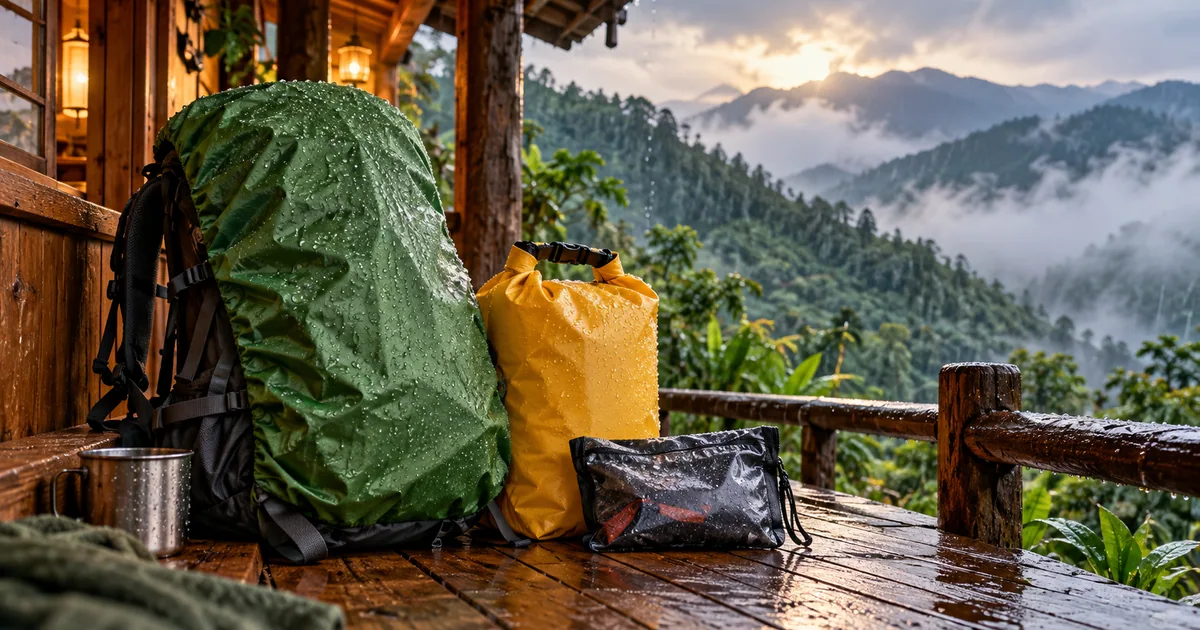
A damp shirt should not return to the dry clothing bag just because both contain clothes. Set aside suitable temporary storage for wet clothing while you wait for an opportunity to deal with it.
Keep rubbish and hygiene items away from food and sleeping equipment. Prepare a place for rubbish before the trip. Dry storage planning helps keep these groups separate.
Check balance after packing
Put the pack on and walk in a controlled setting. Notice movement, sideways pulling or a hard item pressing into your back. Reposition the load rather than using tighter straps to compensate for a badly placed object.
Secure external items using the pack’s intended features and keep them clear of other walkers. Sleeping equipment hanging outside still needs appropriate protection.
Try three simple tasks
- Take out and repack the rain layer.
- Reach water, food or another item used frequently.
- Open the evening kit without mixing it with wet equipment.
Does neat packing mean a light load?
No. Review weight, unnecessary items and carrying comfort separately. Use the checklist and the actual Lung Cung programme if preparing for that trip.
For additional diagrams on stable load placement and accessible items, see REI’s backpack packing guide.