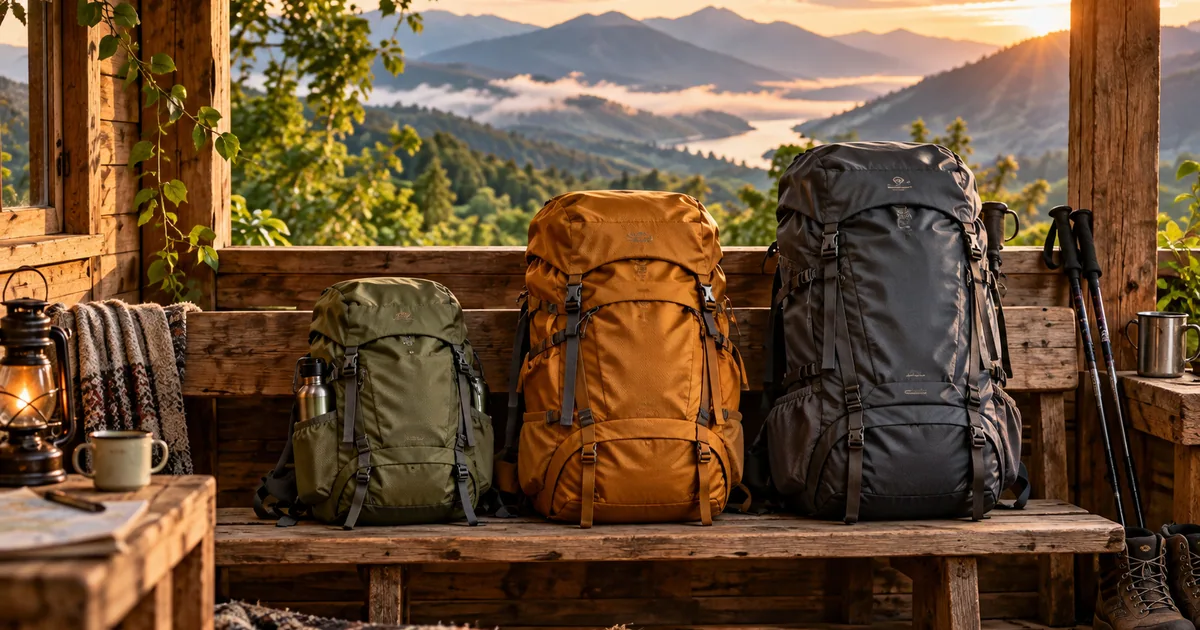
Illustration for this trekking equipment guide.
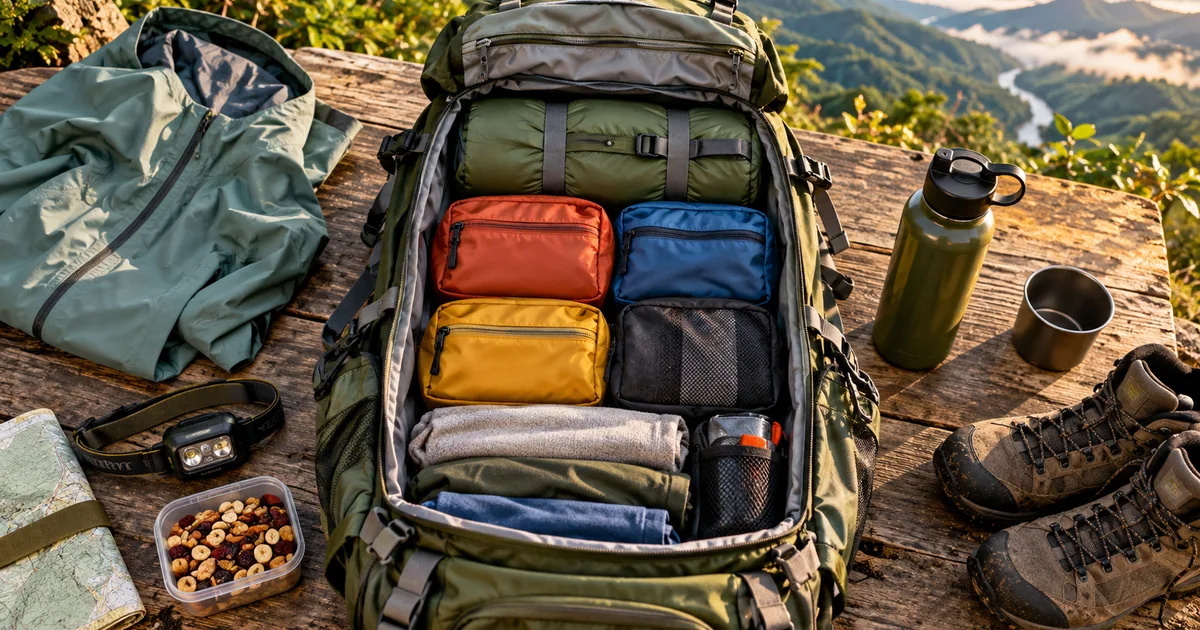
Choose backpack size from the equipment you must carry, the support included and your personal needs. There is no single litre capacity that fits every two-day trek. Put the actual kit into a pack that fits your back before deciding.
Capacity describes space. It does not tell you whether the packed load is light or comfortable to carry.
List what stays with you
Separate items for the walking day, overnight stop and time after the trek. If equipment can stay in a vehicle, confirm that arrangement. If a porter carries part of your luggage, ask what is accepted and when you receive it again.
Water, rain protection and other items needed between stops must remain accessible. Begin with the packing checklist and porter arrangements for the selected route.
| Your arrangement | What to put in the trial pack |
|---|---|
| Overnight luggage supported | Daytime essentials and the layers you need to keep with you |
| Carrying all equipment | The required sleeping kit, clothing, supplies and personal items |
| Cool or wet conditions | Actual protective layers and dry storage |
| Several walking days | Changes of clothing and the items accessible on each stage |
| Special personal equipment | The item itself, its protection and its real weight |
Litres and kilograms answer different questions
A compact object can be heavy. Bulky clothing can occupy more space without weighing the same as an equivalent volume of water. A partly empty bag may therefore already contain a substantial load.
Check the weight of your actual kit and how the pack carries it. A scale helps describe the load to an adviser; it cannot determine an individually appropriate weight by itself.
Too much spare volume can encourage unnecessary packing. Too little may leave equipment hanging outside, where it is harder to secure or protect. Resolve the equipment list before choosing a capacity label.
Fit and access matter alongside space
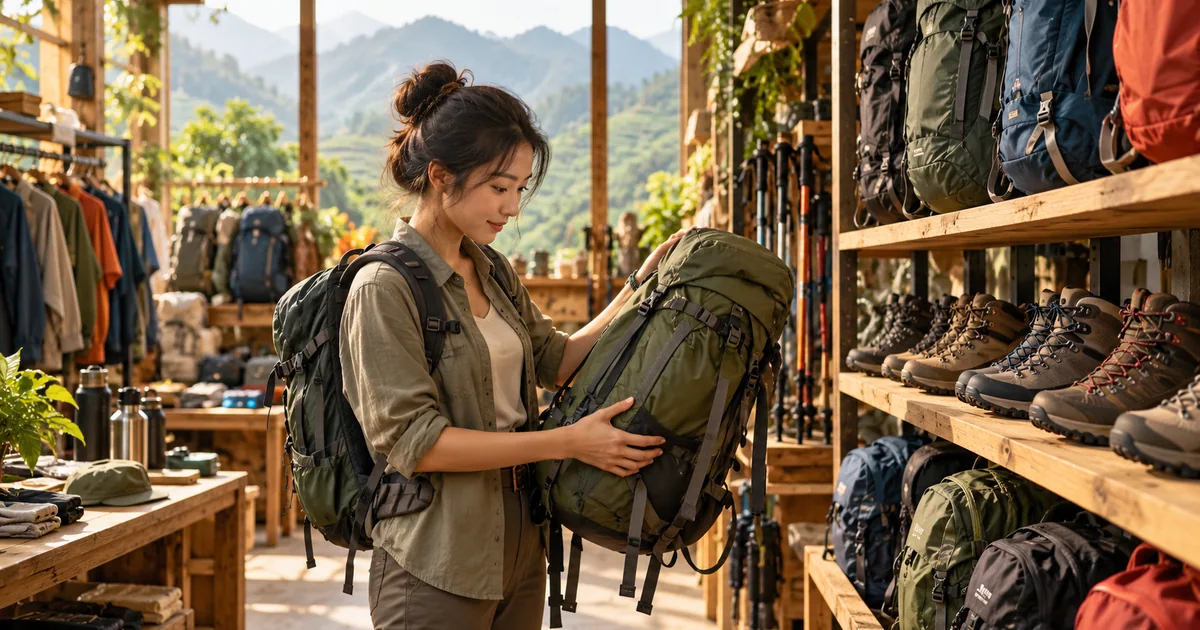
Try the back length, harness and hip belt where fitted. Wear clothing similar to the trip and walk with the loaded pack. Check whether you can reach water and remove the rain layer without unpacking the overnight items.
Packing layout is separate from capacity. A bag that contains everything can still be badly balanced or difficult to use.
Try before buying or renting
Ask about return or rental conditions before using the pack beyond permitted testing. Check buckles, zips, straps and any cover. A water-resistant fabric does not establish that the whole pack protects sleeping equipment from rain.
Does every two-day trip need a large pack?
The support and equipment determine the answer. Compare Lao Than with the requirements of Nam Kang Ho Tao rather than shopping from the duration alone.
Can I use my existing backpack?
If its fit, condition and capacity suit the actual kit, you may not need a replacement. Read renting versus buying before spending.
REI separates capacity, features and fit when choosing a pack. See REI’s backpack selection guide.