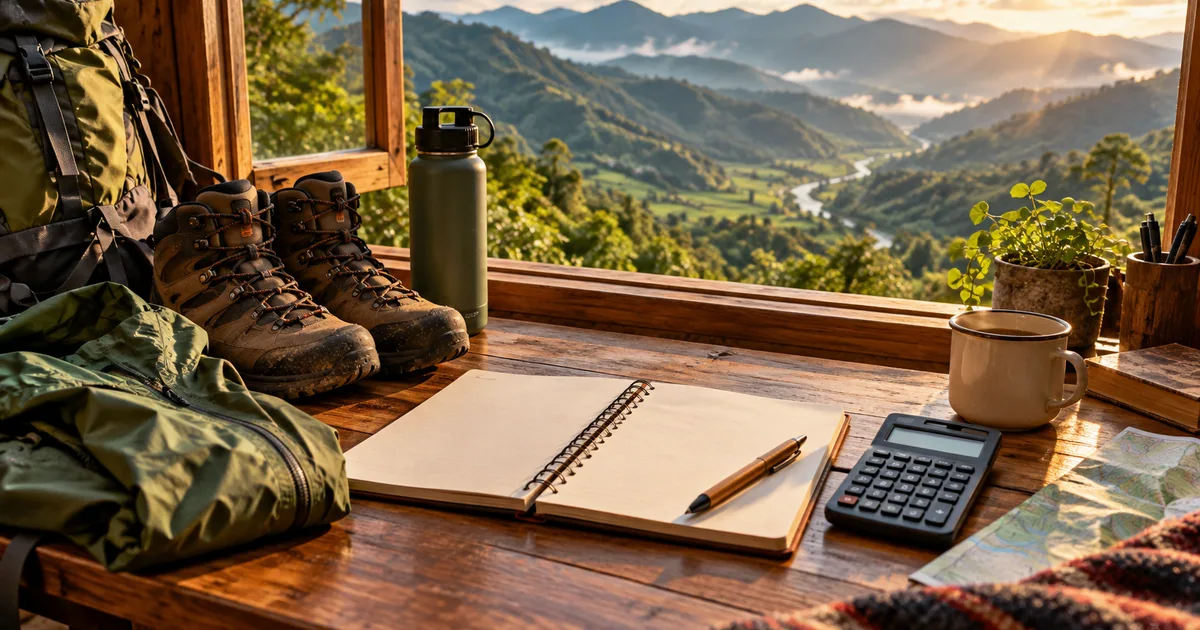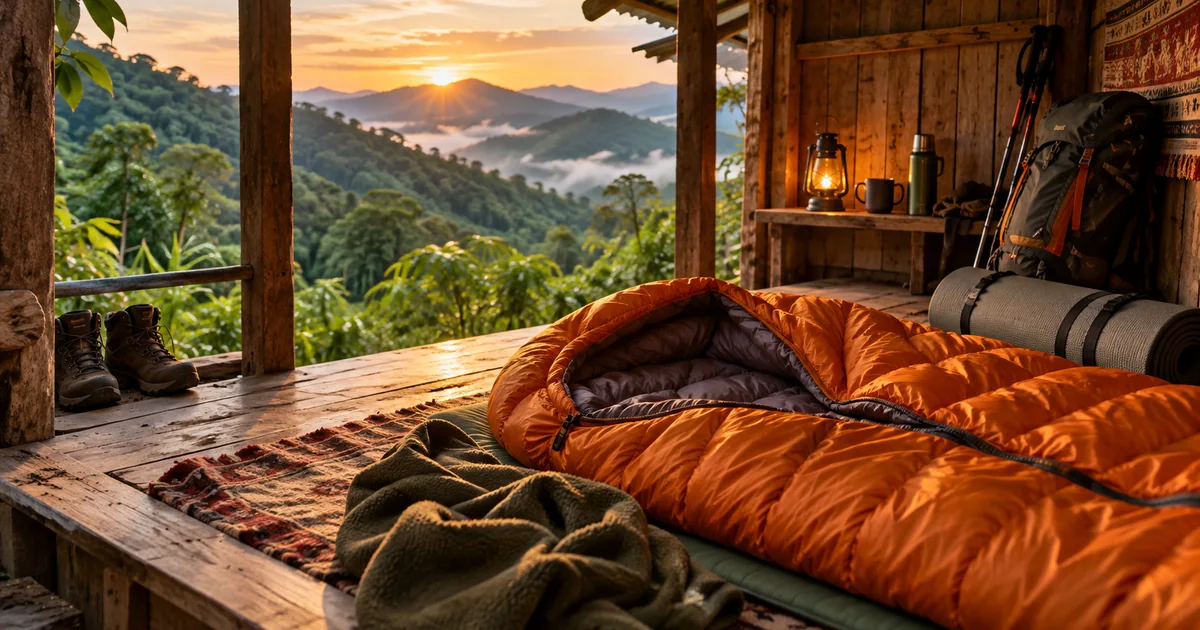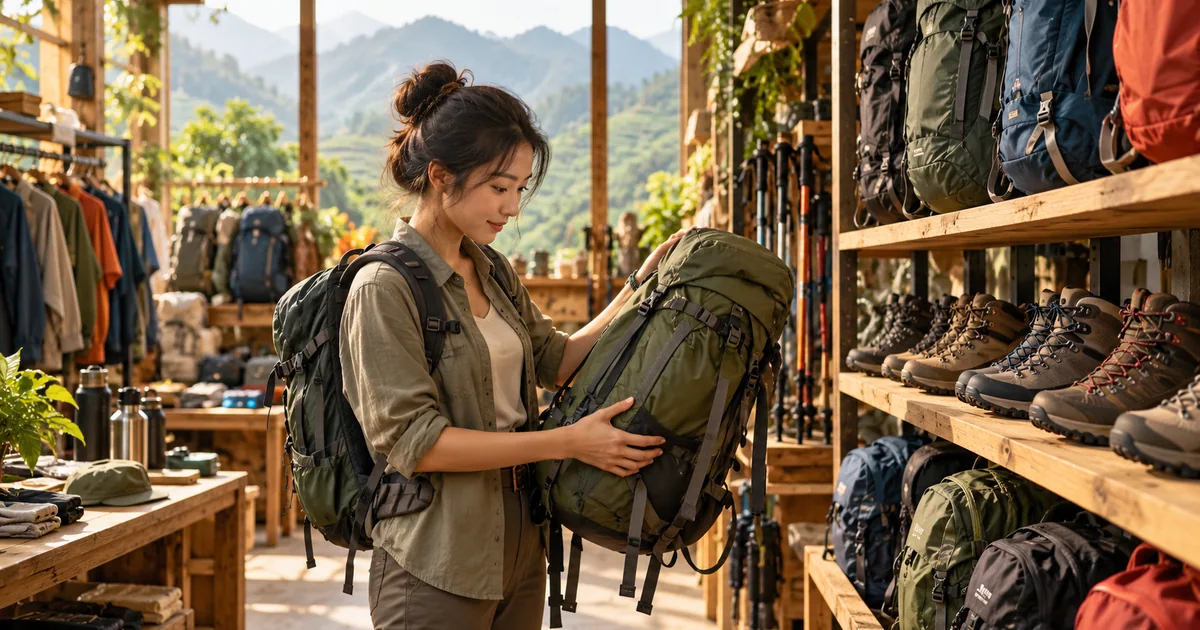
Illustration for this trekking equipment guide.
Decide whether to rent or buy trekking gear by fit, expected use and the condition of available equipment. You do not need to buy a complete new kit for a first trip. Check your own equipment and what the tour supplies before arranging anything else.
This guide is a decision process. It does not establish that UpTrail operates a rental service for every item discussed.
Prioritise items that need to fit you
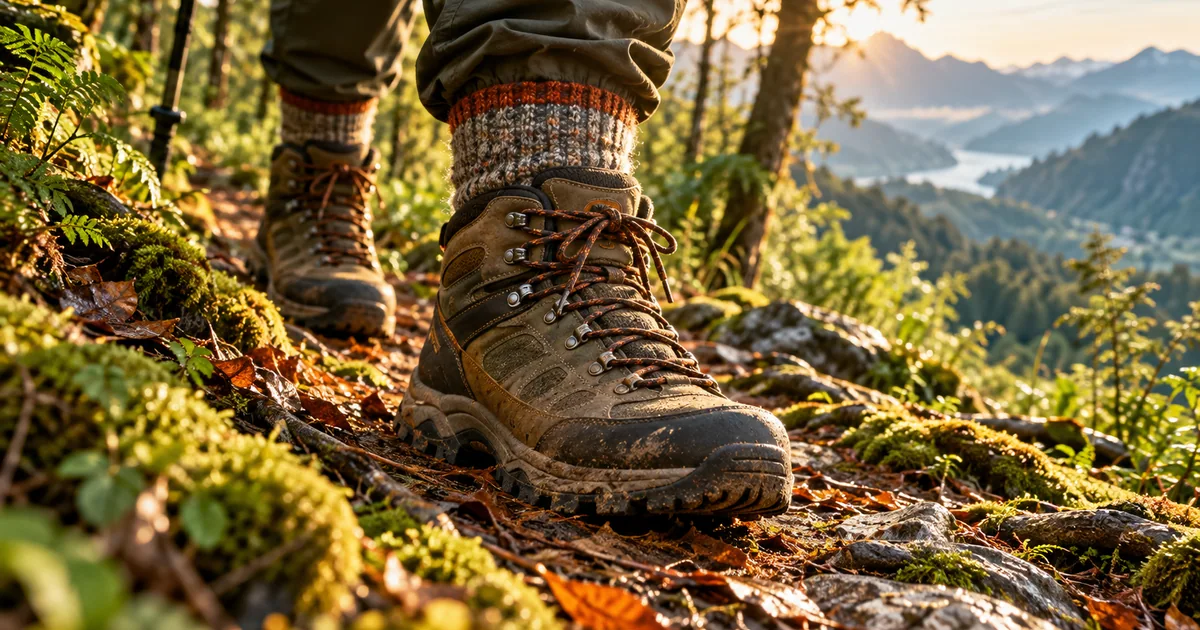
Footwear, backpacks and clothing need to work with your body and the route. A low rental price does not compensate for a poor fit. An existing item you have tested may be suitable without either renting or buying.
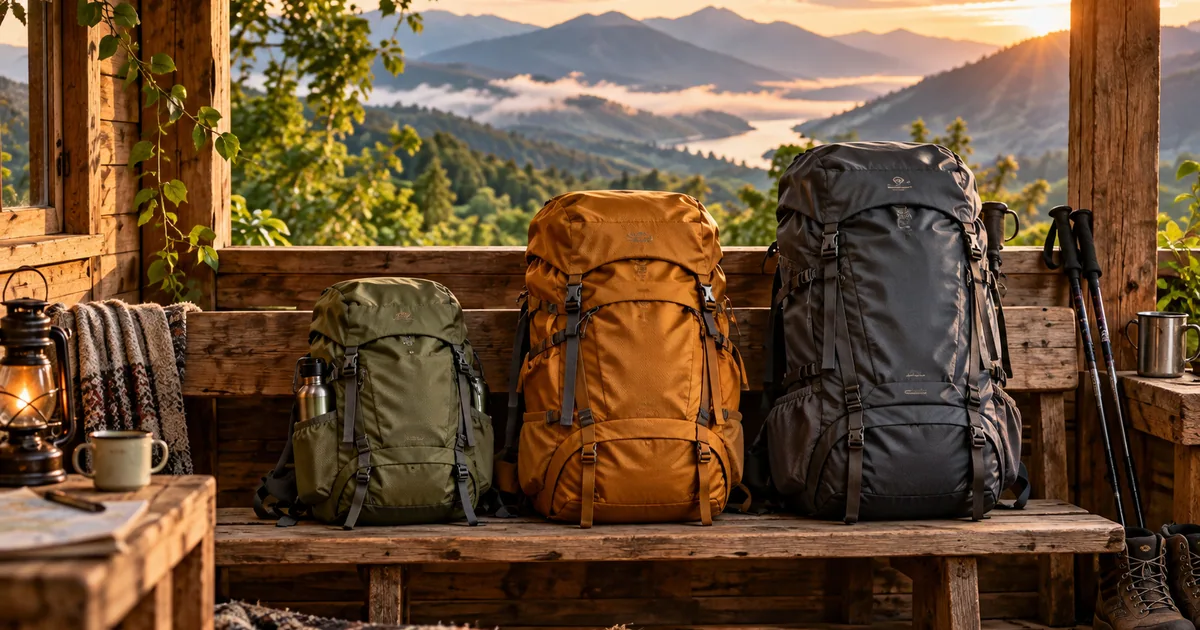
Use footwear fit checks and backpack selection before comparing prices. Personal-use equipment does not automatically have to be newly purchased.
When can renting make sense?
Renting may suit occasional use, a trip needing different equipment or an opportunity to try a model. First confirm that a suitable item is available and can be collected in time for testing.
| Rental detail | Confirm before committing |
|---|---|
| Model and size | The actual item suits the person and route |
| Condition | Closures, straps, power and protective features work |
| Cleanliness | Care and use requirements are understood |
| Total charge | Rental fee, deposit and possible extra charges |
| Timing | Collection allows testing, and the return deadline fits your travel |
| Responsibility | Terms for damage or loss are clear |
Do not leave “rent equipment” as an assumed budget line until availability and fit have been confirmed.
Compare costs using realistic future use
For a rough budget comparison, divide the purchase and related costs by the number of uses you actually expect. Compare this with rental costs, collection and return arrangements. The result is a budgeting tool, not a measure of suitability.
A very large hypothetical number of future trips can make an expensive purchase appear cheaper than your actual plans support. Keep the calculation within the complete trip budget.
Inspect equipment supplied by the tour
Some programmes supply poles, lamps or other items. Check the route’s inclusions before renting duplicates. Ask what type is provided and when you receive it.
A sleeping bag needs an appropriate specification and condition; a headlamp needs a checked power supply. The phrase “equipment included” does not settle every requirement.
A sequence for the first trip
- Choose the programme and its equipment requirements.
- Inspect what you already own.
- Mark items supplied by the organiser.
- Test anything that must fit.
- Arrange the remaining items under clear terms.
- Keep a note of what you can reuse.
Is a complete starter bundle the easiest solution?
Only if the items fit your needs. A bundle can also add unused equipment or conceal a poor fit. Start with the packing checklist and ask the organiser about any unresolved item before departure.