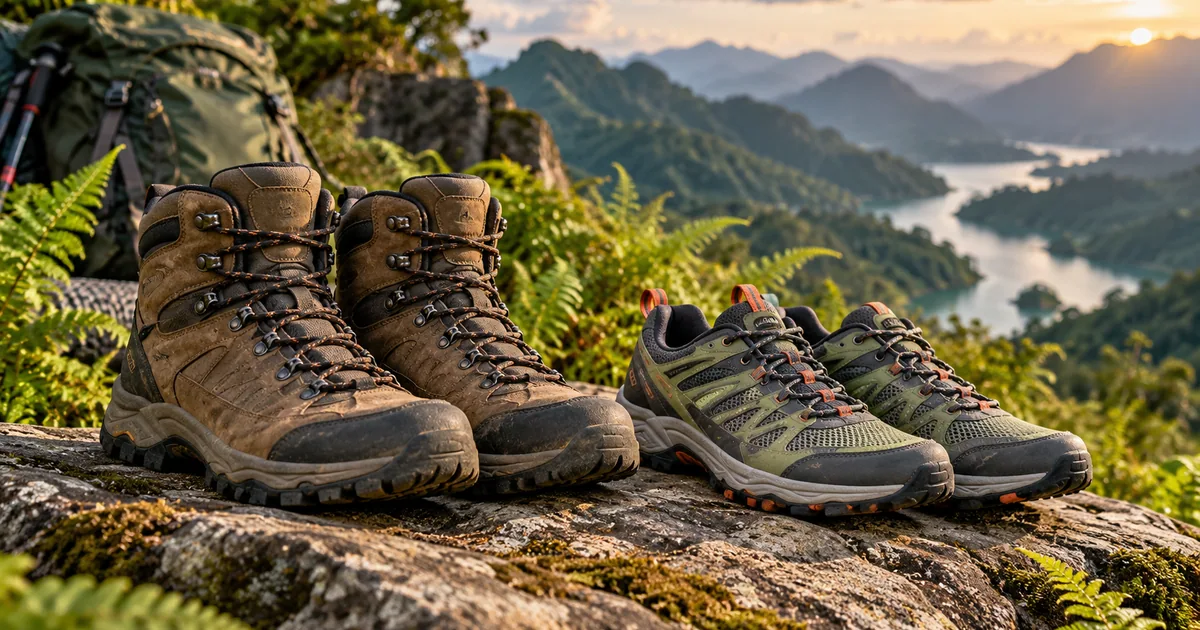
Illustration for this trekking equipment guide.
Choose trekking shoes for a first trip by fit, terrain and the load you will carry. A well-reviewed model can still be wrong for your feet. Try the footwear with your planned socks, check movement on a slope where possible and leave time to use it before the trek.
Start with the route and the footwear you own
Ask about the trail surface, walking stages and expected wet conditions. A short outing and several days carrying equipment can place different demands on footwear. Read the itinerary before shopping for a style or brand.
Check your existing shoes for worn tread, loose soles and damaged uppers. A suitable pair in good condition need not be replaced just because its name does not include “trekking”. Equally, familiarity does not make a deteriorating pair suitable.
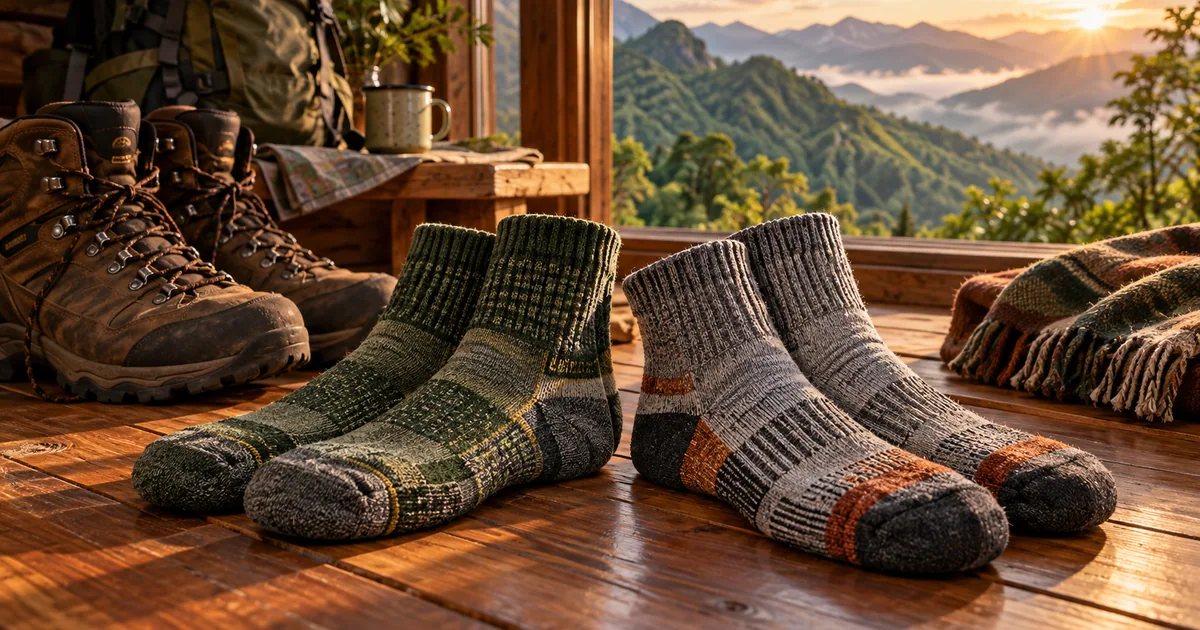
Try shoes and socks together
Check both feet. Notice whether your heel slips, the width feels restrictive or your toes are pushed forward uncomfortably when descending. A printed size can fit differently between models and brands.
Walk and change direction within the shop’s permitted testing area. Use an incline if one is provided and ask about return conditions before wearing new shoes outside. Do not assume that buying one size larger is the correct rule for everyone.
| Fit check | What to notice |
|---|---|
| Heel | Whether it stays comfortably in place during movement |
| Forefoot and toes | Pressure, width and space when stepping downhill |
| Socks | Whether the planned thickness changes the fit |
| Lacing | Whether adjustment holds the foot without uncomfortable pressure |
| Condition | Tread, upper and sole attachment |
Read construction and water protection in context
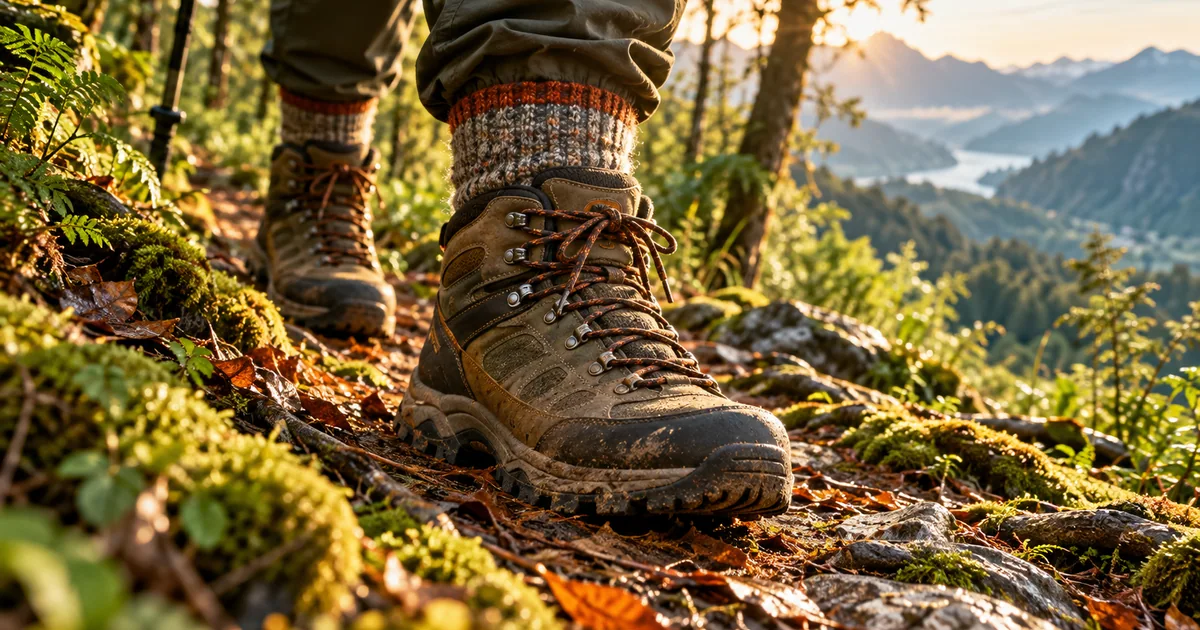
Tread depth alone does not establish grip on every surface. Look at the model’s intended use and condition. Stiffness should also fit the terrain, load and your experience rather than simply feeling substantial in your hand.
Water protection and drying are separate considerations. Water can enter above a shoe’s protected area. Ask how the design suits the expected conditions instead of assuming a waterproof label means dry feet throughout a trek.
Use the shoes before the mountain trip
Take shorter walks on familiar ground and notice pressure points. Test the shoes with the socks and bag you plan to use. Address a poor fit early rather than trying unfamiliar lacing or different socks for the first time at the trailhead.
Are high boots always the better choice?
Cuff height alone cannot decide suitability or guarantee protection from injury. Compare fit, construction, conditions and your experience. The footwear comparison helps you assess the actual models.
Must I buy a new pair for each route?
Review the footwear and its condition for each programme. You may be able to use the same pair, but Lao Than and Ta Chi Nhu still need separate itinerary checks.
Finish with the sock fit checks and packing checklist.
For additional fitting advice, REI discusses toe room and checking shoes with the socks you will wear. See REI’s footwear fitting guide.