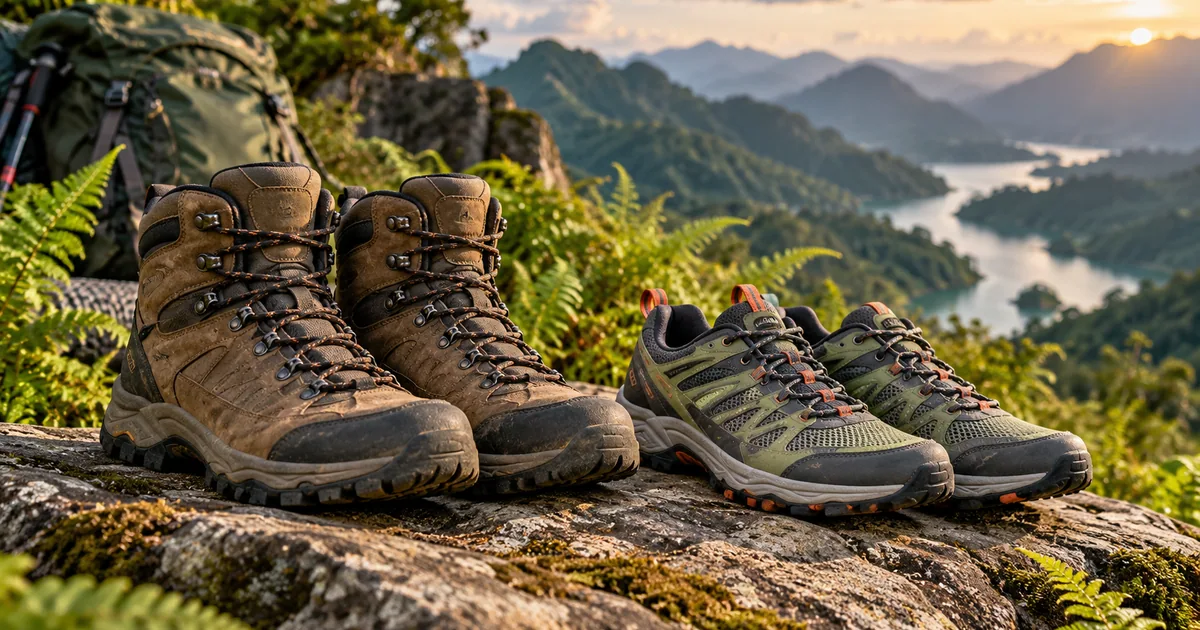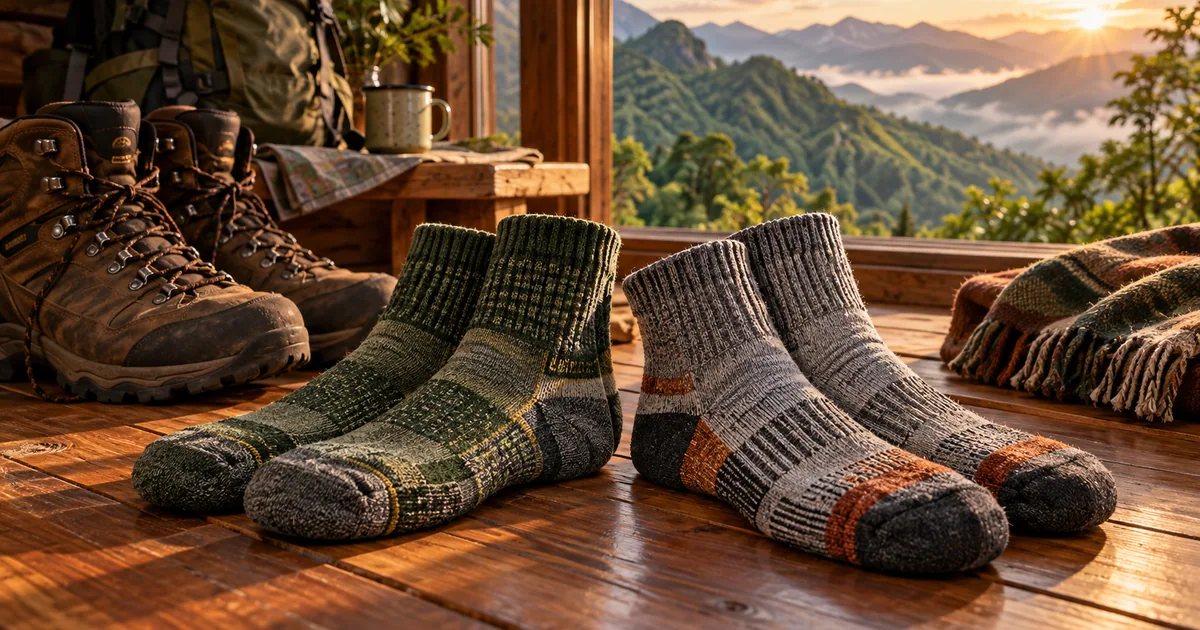
Illustration for this trekking equipment guide.
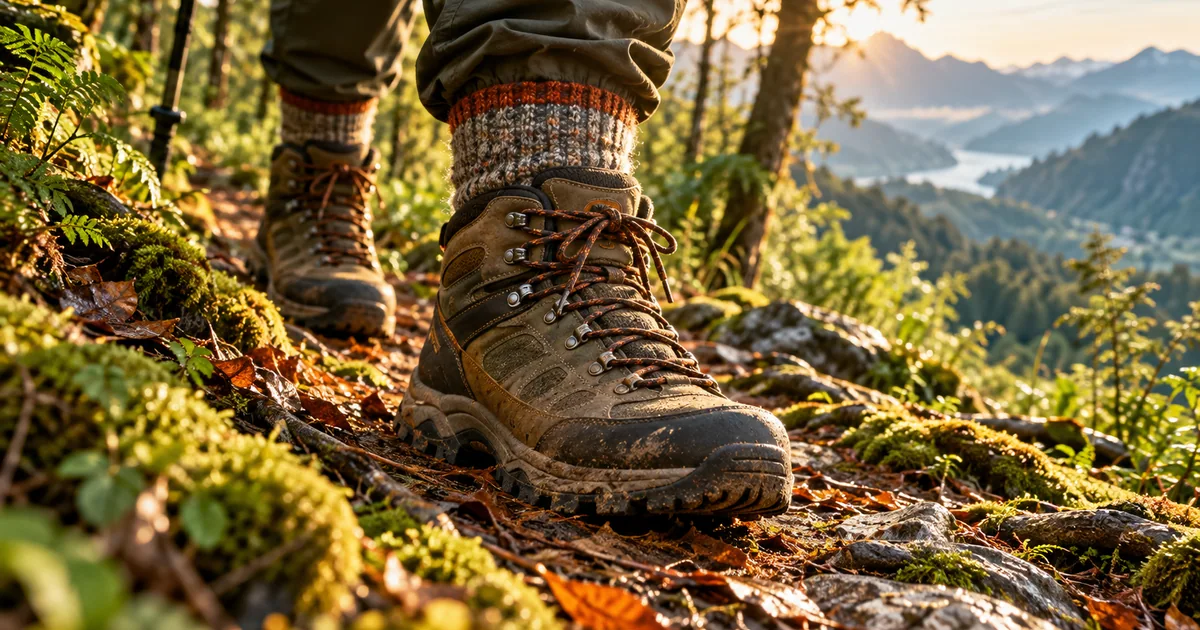
Choose hiking socks together with the shoes you will wear. Thickness, fit, seams and comfort during movement matter. A sock that changes the space inside an otherwise comfortable shoe can change the fit of the whole combination.
Keep suitable dry spares for the programme, while recognising that no sock guarantees freedom from every foot problem.
Use your planned socks when trying footwear
Changing from thin socks to thick ones can make a shoe feel tighter. Loose material can shift or bunch during walking. Test both feet with the actual combination rather than choosing socks by softness alone.
Walk and try a manageable descent in a controlled setting. Notice pressure, heel movement and the position of seams. Use the footwear fit checklist before deciding that either the shoe or sock is right.
| Check | Question |
|---|---|
| Thickness | Is there still comfortable room in the shoe? |
| Fit | Does the sock move, bunch or feel excessively tight? |
| Seams | Do you notice pressure during movement? |
| Material and care | Does the intended use and washing method fit your needs? |
| Cuff | Does its height work with the footwear? |
| Spare pair | Will it stay dry until you need it? |
Plan for moisture and changing
Wet socks can change how the inside of the shoe feels. When an appropriate opportunity arises, change according to your needs and keep the damp pair separate.
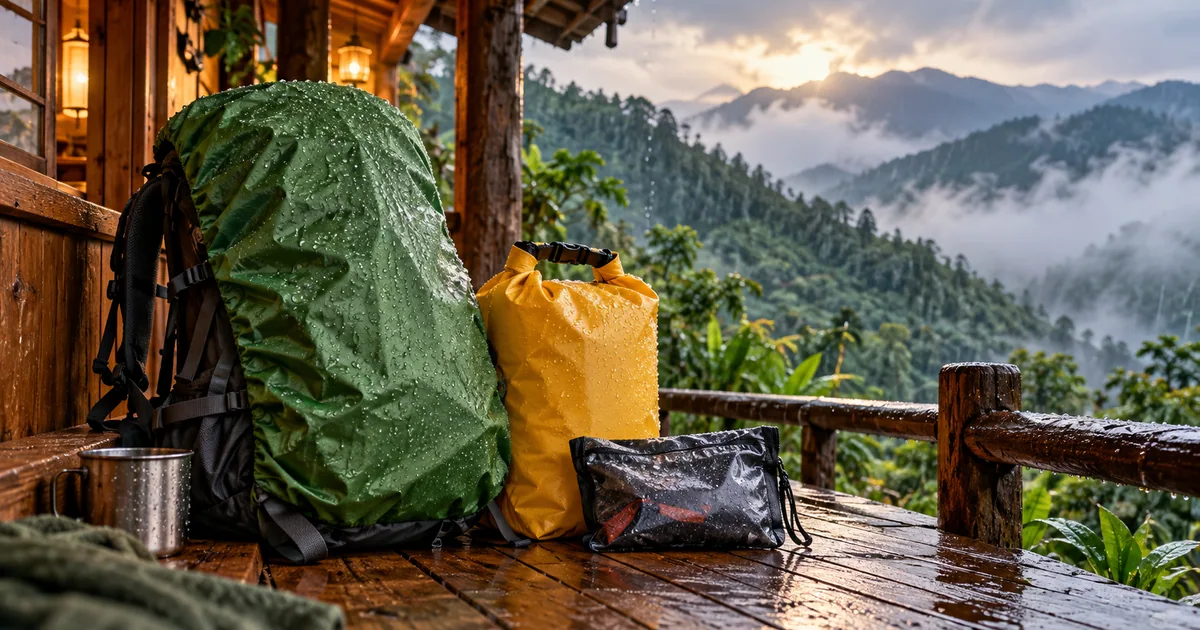
Protect the dry pair inside your luggage. Putting it beside damp equipment does not preserve it as a useful spare. Dry-storage planning covers that division.
If the footwear itself is wet, changing socks does not instantly dry the whole system. Consider the programme’s stops and sleeping arrangements instead of expecting one product to solve every moisture problem.
Test before changing everything at once
Use the socks and shoes on a familiar walk. If something needs adjustment, changing one element at a time helps identify the cause. A first mountain trip is a difficult place to test new footwear, new socks and a new load simultaneously.
A sock comfortable in one pair may feel different in another. Recheck the combination if you switch between hiking footwear and trail runners.
How many pairs should you pack?
Count the days, opportunities to change, dry storage and your own needs. Identify the pair for walking, the one for resting and what serves as a spare. There is no universal number for every two-day tour.
Are thicker socks always better?
Extra thickness may change warmth and fit, including making the shoe restrictive. Try the actual combination.
Can I ignore discomfort because I bought hiking socks?
Pay attention to discomfort and communicate a problem. If it affects your ability to walk, seek appropriate advice rather than relying on a product label.
Use the checklist for your Ta Chi Nhu or Samu U Bo programme.
REI considers sock height, cushioning, fabric and fit. See REI’s hiking sock guide.