Illustration for this trekking equipment guide.
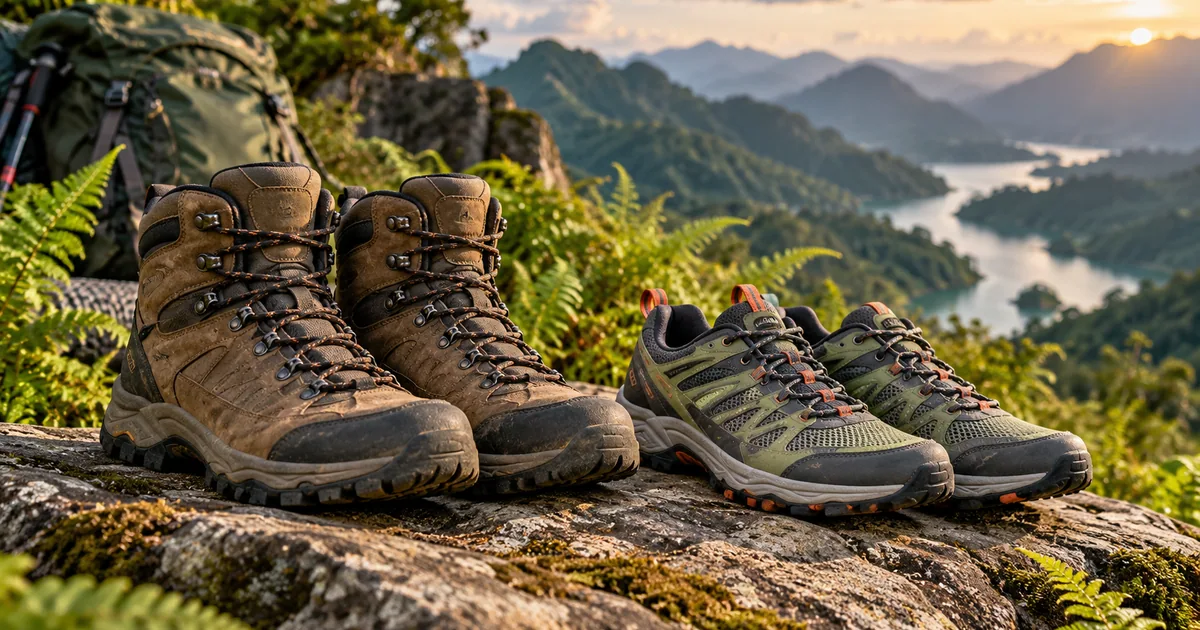
Compare hiking shoes and trail running shoes by the individual model, your feet, terrain and carried load. The category name does not establish that one pair will suit every trek. Hiking footwear and trail runners each include many different constructions.
Start with your programme and a pair you can test. Buying both categories is not a requirement for a first trip.
Compare construction before weight
| Feature | Question for each pair |
|---|---|
| Fit | Does it hold the heel with comfortable width and toe space? |
| Outsole | What terrain is it intended for, and what condition is it in? |
| Structure | Does it suit the walking and load you expect? |
| Weight | How does it feel during a longer trial walk? |
| Moisture | What protection and drying characteristics does the model have? |
| Familiarity | Have you used it on terrain resembling the planned trip? |
Comparing a heavy boot designed for one purpose with a light trail shoe designed for another does not settle the choice for every hiker. Identify what the route asks of your footwear first.
When to consider hiking footwear
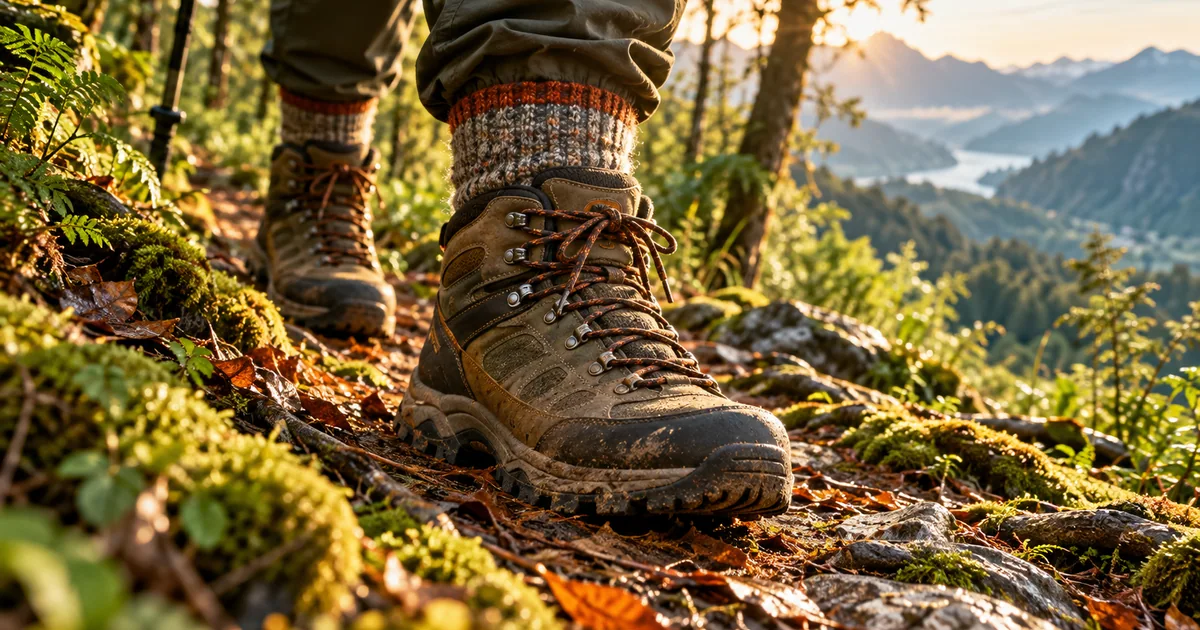
Look at walking-oriented models where their construction suits the route and the load. Test stiffness as well as fit; a pair that is more rigid than you need can also feel awkward.
For a beginner, a sound, familiar fit matters more than a professional-looking shape. A high cuff does not by itself establish that a shoe is appropriate for every difficult section. Follow the route instructions regardless of footwear.
When to consider a familiar trail runner
Some walkers prefer the flexibility or weight of a trail shoe they already know. Check the tread, structure and intended surface against the mountain programme. Experience using it in a park does not establish suitability for a longer mountain descent.
Inspect an older pair for wear and separation. If you are new to sustained descents, test how your foot moves inside it on a safe slope before departure.
Think through wet conditions
Keeping water out and drying after getting wet are different functions. Water can enter over a shoe’s opening. Compare the conditions, material and design rather than choosing entirely from a waterproof label.
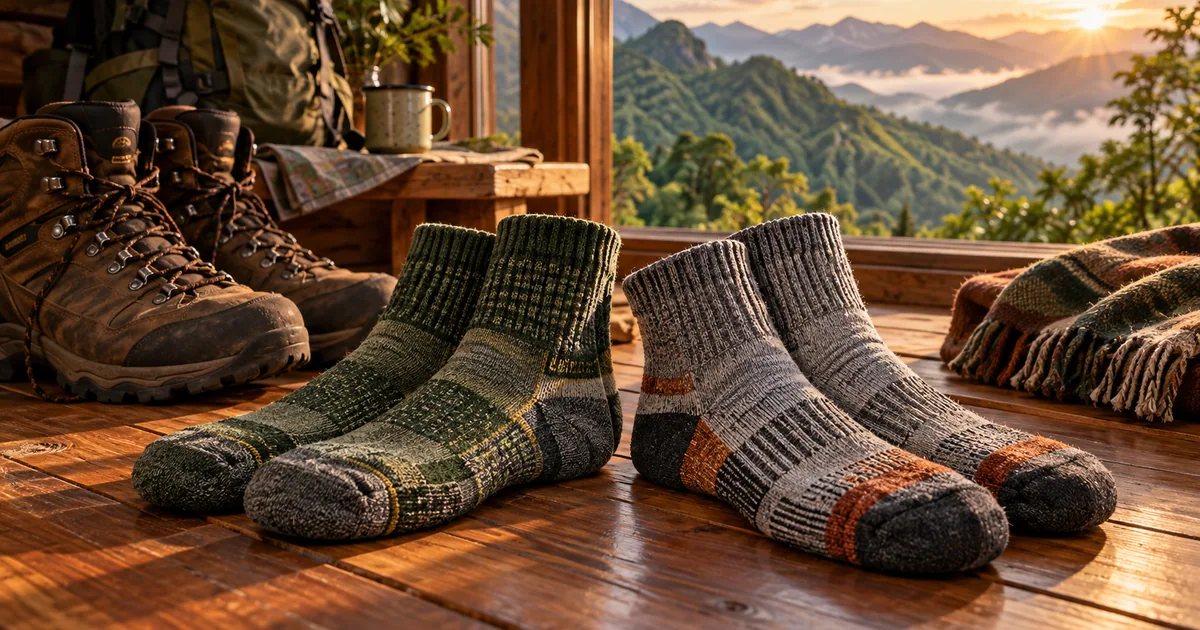
Try your planned socks with each option and keep spare clothing protected. Neither a shoe category nor a sock choice guarantees that you will avoid every foot problem.
Make the decision with a trial walk
Use a familiar route with a manageable slope and a bag resembling your planned load. Record comfort, control and pressure points. Stay within return conditions if you have not yet decided to keep the footwear.
Will a lighter shoe make a hard route suitable?
Weight is one factor. It cannot replace fit, grip, experience or preparation for the walking. Review the difficulty guide and any specific instructions for Ngu Chi Son if considering that route.
Use the footwear fit checklist before finalising your choice.
For context on the differences between footwear categories, see Appalachian Mountain Club’s footwear comparison.