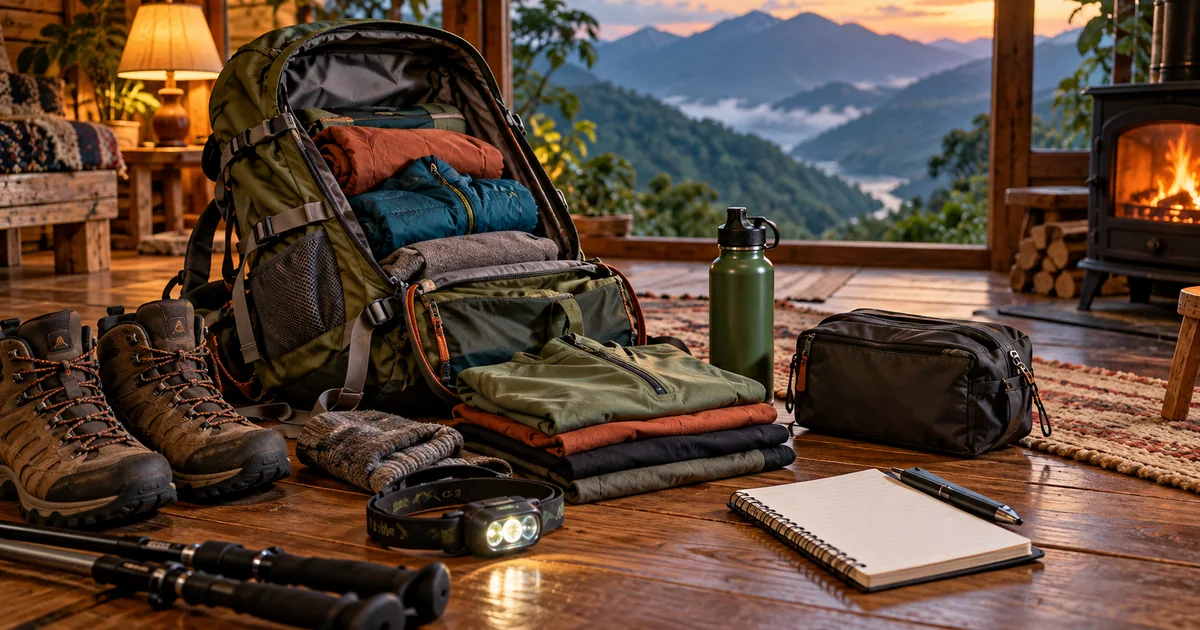
Illustration for this trekking conditions guide.
Read a mountain weather forecast by checking the location, update time, forecast period and relevant warnings first. Then compare it with current route information from the organiser. Weather in a nearby town does not reliably describe every point on a mountain programme.
Identify the forecast location
An application may display a town, a broad area or a reference coordinate under the destination name. Check what the data represents before using it to choose clothing.
If a tour page includes a weather widget, read its location label and data limits. A forecast coordinate does not confirm that the whole route is open. Avoid turning a fixed subtraction from the town temperature into a claimed summit measurement.
Read the forecast alongside the whole itinerary
The travel night, walking start, summit stage and descent can take place in different locations and periods. Look at the relevant interval for each part.
For a multi-day programme such as Ky Quan San, check consecutive days instead of only the expected viewpoint time. A longer-range forecast is useful for planning, but should not be preserved as a guarantee when newer information appears.
| Field | Question |
|---|---|
| Location | Which area or point, and near which part of the route? |
| Update | When was this information issued? |
| Period | An hour, a day or an accumulated interval? |
| Rain and wind | Is there a significant change or a relevant warning? |
| Visibility | Is there useful information beyond a general icon? |
| Trail conditions | What has the local team confirmed? |
Make comparisons on the same basis
If two applications disagree, first check whether their locations and update times match. Do not choose the one that displays the weather you want.
Send the source, location, issue time and concern to the organiser. A cropped image with no date makes the question harder to answer. Prioritise relevant official warnings and the current operating information.
Use the result to prepare practical equipment
Once the team confirms the conditions to prepare for, review layers, rain protection, dry clothing and power. Ask about a missing item instead of packing for every imaginable situation.
The final-day checklist helps confirm the latest message. The season guide serves longer-term choices; it cannot replace this check.
A useful question to send
Record the source, forecast point, update time, interval, what concerns you and which part of the programme it might affect. Ask what arrangement applies to the booked departure.
Can a forecast decide whether I should take the route?
It supports the question, while the operating decision also needs current trail information and the group’s requirements.
For an example of why mountain forecasts distinguish elevations and visibility, see this UK-focused explanation; it is not a forecast for Vietnam: Met Office’s mountain forecast guide.