

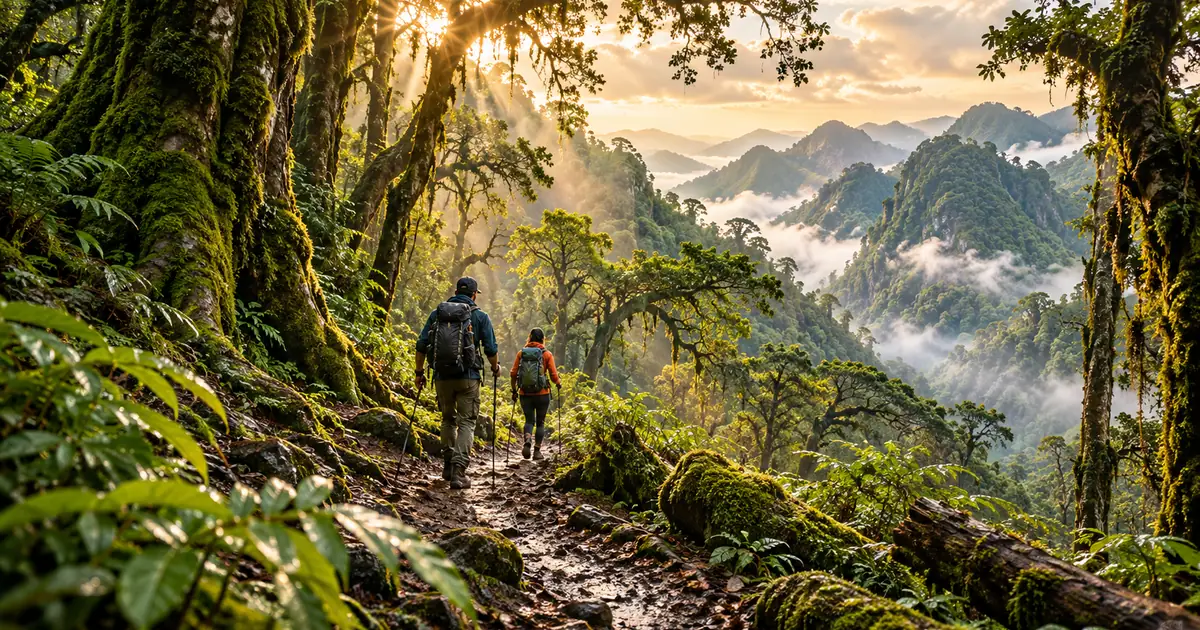
Ta Lien Son is a forest-focused trek rather than a programme of continuous open viewpoints. Its roots, changing light and damp surfaces are part of the walking demands as well as the scenery. Choose it because that full experience suits you.
Current UpTrail route facts
| Trek | Walking days | UpTrail difficulty | Recorded summit elevation |
|---|---|---|---|
| Ta Lien Son | 2 | 3/5 | 2,996m |
Walking days exclude the Day 0 approach. Count all overnight stops in the full programme. Difficulty is UpTrail’s internal scale.
The Ta Lien Son programme sets out the approach and overnight stop. Read the Day 0 arrangements separately from the two walking stages.
Who is likely to enjoy it?
The source article favours walkers interested in forest surroundings and prepared for hills and uneven footing. Experience on an introductory mountain route can help you discuss whether this is an appropriate next step.
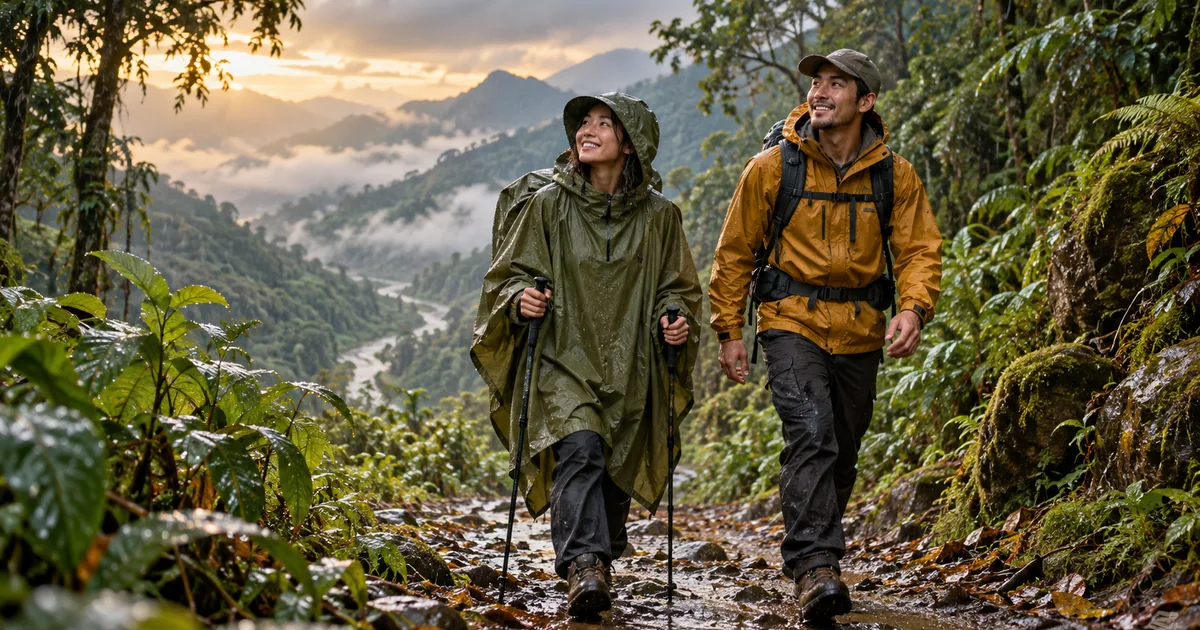
Tell the organiser about discomfort, balance concerns or difficulty keeping equipment dry. A photograph described as a fairy-tale forest does not establish that the trail will feel easy.
Move through the forest responsibly
Canopy and weather change the available light. Observe the actual surface: a root, earth and leaves can require different judgement. Do not follow another person's foot placement without looking.
Keep to the instructed path and leave moss and vegetation undisturbed. Do not step onto or pull living surfaces to arrange a photograph. Choose a suitable group stop for photography instead of repeatedly blocking the path.
More open high sections may feel different from the warmer forest ascent. Keep adjustable layers available rather than relying on one garment worn throughout.
Read the walking and overnight sequence
Use the first stage to find a rhythm and check the equipment. Arriving at the overnight stop still leaves changing, eating and preparing the next stage.
The return through familiar ground can have a different surface after overnight moisture or rain. Retain concentration for descent and follow instructions about spacing and hand use.
Prioritise useful equipment
- Test footwear and the real carried load.
- Protect a dry evening set inside the pack.
- Check light, rainwear and accessible warm clothing.
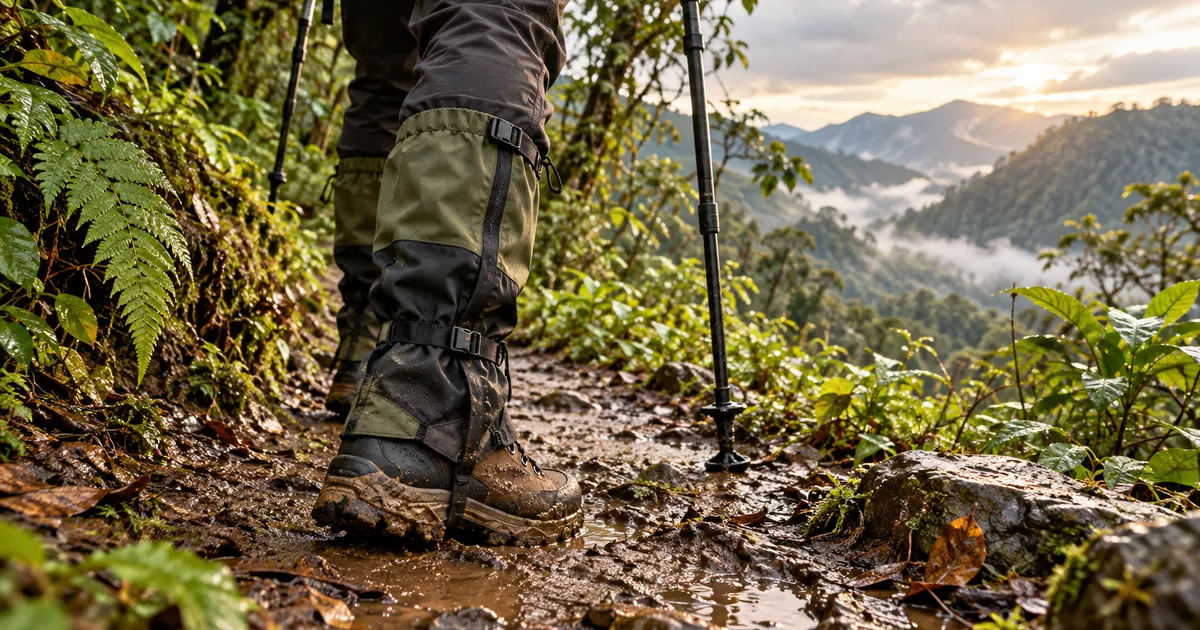
- Confirm whether gaiters or other route-specific items are advised or supplied.
- Check how poles are carried where hands need to be free.
Read rainwear choices and gaiter limits. Equipment does not replace local decisions for the actual ground.
Season and comparison
Use current rainfall and local observations alongside the seasonal interest. A green forest image cannot tell you whether the path is dry on your departure.
Is this only for experienced trekkers?
Discuss your activity and footing experience. A prepared newcomer may ask about suitability, while an easier introduction can offer useful experience first.
How does it differ from Samu U Bo?
Compare both forest programmes by approach, daily demands and arrangements instead of trying to identify a guaranteed better photograph.

No comments yet. Ask a question or share what you are considering about this trek.