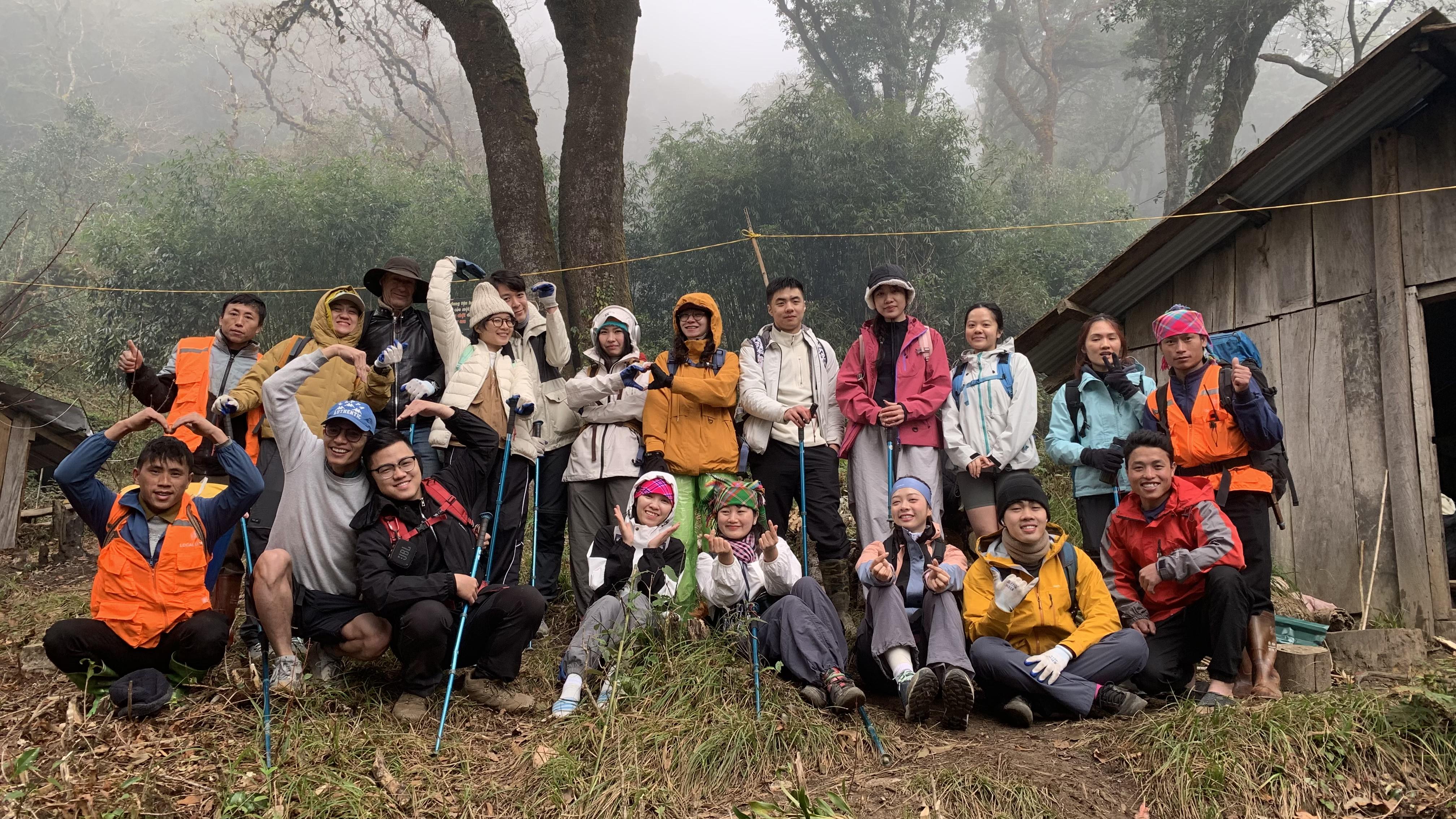
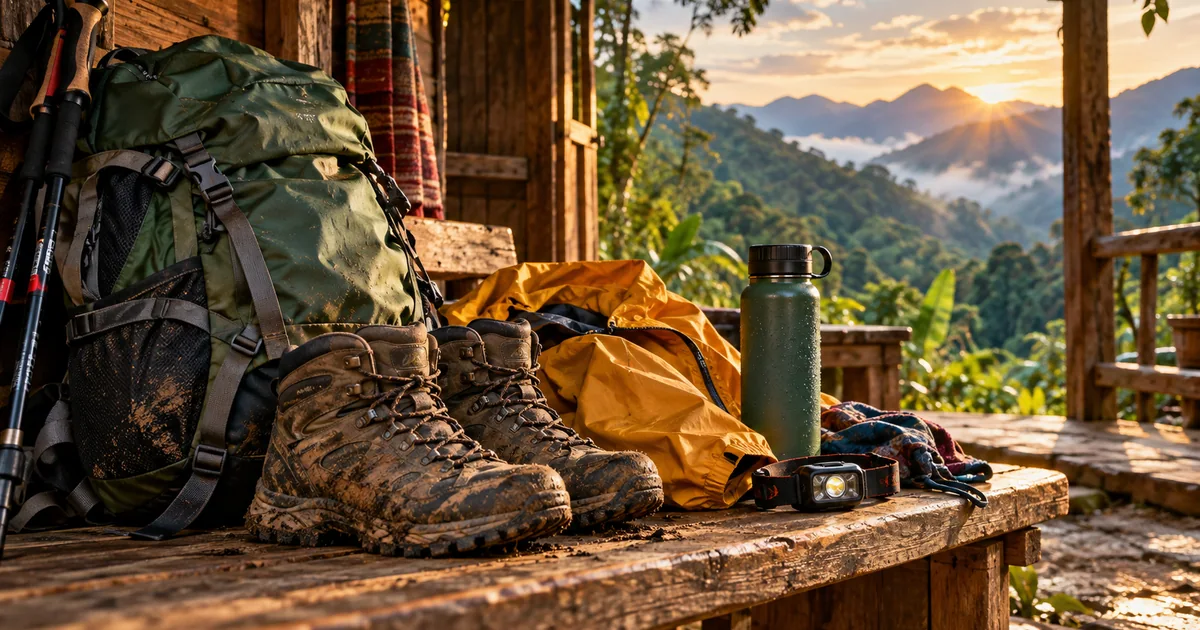
Illustration for this trekking planning guide.
First-time trekking mistakes often start before the trail: choosing a route from a photograph, leaving equipment untested, packing too much or missing the final departure instructions. Check those decisions early so that you can adjust your plan.
The situations below illustrate preparation choices. They are not accounts of recorded UpTrail customer incidents, and completing the checklist does not guarantee a problem-free trip.
1. Choosing the view before reading the route
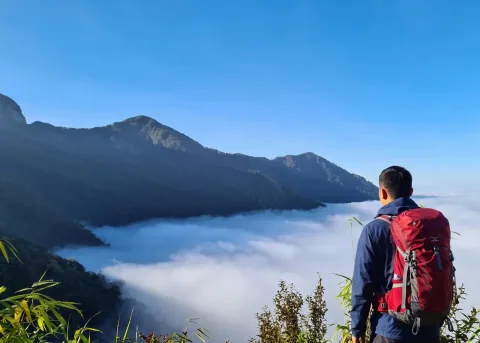
A cloud-filled summit photograph can make a demanding multi-day route look like the obvious first trip. Start instead with your recent activity, available time, walking requirements and overnight conditions.
Use beginner trek selection and the difficulty guide before deciding. Read the approach and each walking stage rather than relying on the mountain name or the number of days.
A photograph records conditions at a particular moment. Think about the wider experience you want from the route instead of making a single view the only measure of the trip.
2. Taking unfamiliar footwear straight onto the mountain
The size on a shoe box does not show how your heel, toes and socks will feel on a slope. Check fit and pressure points before departure and use the footwear on shorter outings where possible.
Follow the shop’s return conditions while testing a new purchase. Try your backpack with the items you expect to carry as well. Avoid making the first trek the first test of all your equipment and a new level of activity at once.
3. Packing for every imagined situation
A large bag is easy to fill. Each additional item then travels with you or needs to fit an agreed luggage-support arrangement. Prepare for the selected programme rather than assembling equipment for every type of trip.
| Item type | Question before packing |
|---|---|
| Essential equipment | Is it required for this route or an important personal need? |
| Equipment supplied by the group | Do I need my own version, and why? |
| Items with overlapping uses | Can one suitable item meet both needs? |
| Photography-only extras | Am I prepared to carry them through the walking stages? |
Use the packing checklist. Do not remove water, rain protection, lighting or personal health essentials simply to make a bag lighter. Confirm what is supplied before deciding what to leave behind.
4. Matching the fastest person at the start
A fast early pace can be difficult to sustain through the rest of a mountain day. Talk to the leader about pace and communicate tiredness early so the group can coordinate.
If you experience pain, dizziness or unusual discomfort, tell the person responsible rather than hiding it to keep moving towards the summit. The organiser needs that information to respond; this article cannot assess your health remotely.
5. Relying on an old screenshot of the departure
The final message may clarify pickup, equipment handover or arrangements for the current conditions. Read it, save the contact details and ask about any conflict with information you kept earlier.
Put the Day 0 departure in your calendar. Check your journey to the meeting point and the planned return before making onward arrangements.
A short pre-departure self-check
- I chose the route using its demands as well as its scenery.
- I have tried the footwear and loaded bag I will use.
- I know what I carry and what the organiser supplies.
- I have the current meeting point, time and contact.
- I know whom to tell if I cannot follow the planned pace.
What if my preparation has not gone as planned?
Tell the organiser about your current ability and discuss an appropriate option. An existing booking does not remove the need to respond to a change in your condition or the route.
Review the tour selection questions or contact UpTrail before committing to a programme you are unsure about.