Illustration for this trekking preparation guide.
Fit a hiking backpack by checking its back length and the packed load before tightening straps. Hip belts, shoulder straps, chest straps and load adjusters serve different purposes. Try the equipment you expect to carry; an empty-bag fitting does not reproduce the trip.
Choose a suitable pack before pulling straps tighter
If the back system does not fit, tighter straps may not create a stable, comfortable carry. Capacity and fit answer different questions: litres describe space, while the harness needs to suit your body and load.
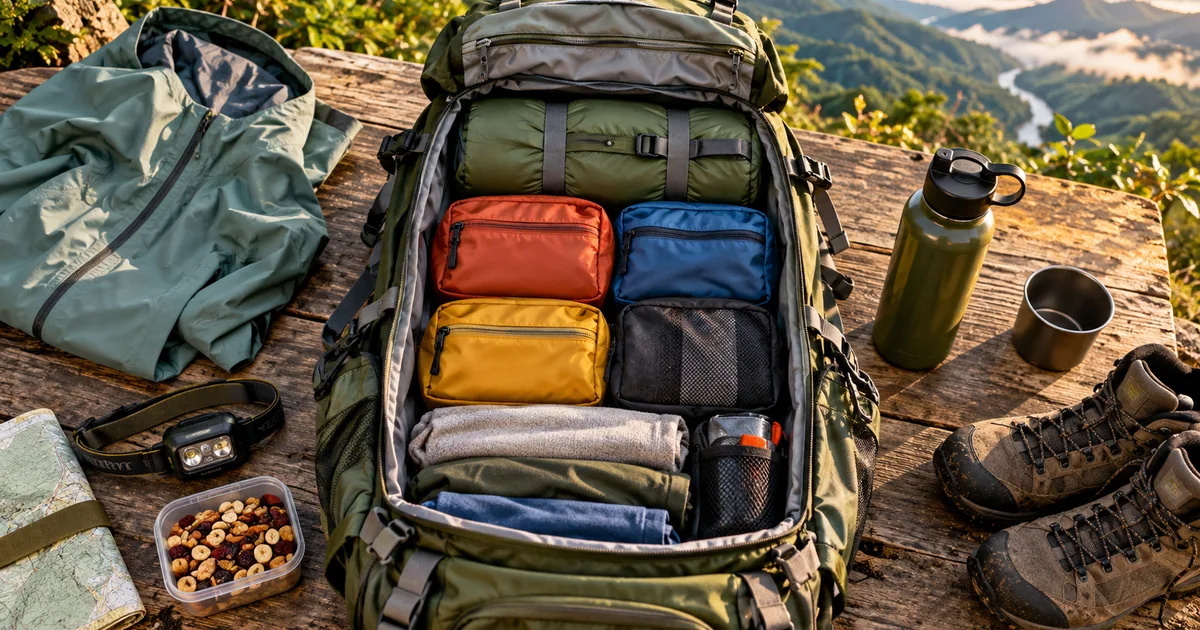
Pack a realistic set of items and check the layout before a trial. An off-centre heavy object can feel wrong even with otherwise appropriate adjustments.
Adjust in a sequence you can recheck
If the model has a load-bearing hip belt, position it as the manufacturer instructs. Aim for stable contact without uncomfortable compression. Adjust the shoulder straps to position the pack rather than trying to pull the whole load upwards with them.
A chest strap helps control shoulder-strap positioning according to the design. It should not restrict breathing or movement. Load adjusters change the upper pack position on models fitted with them; not every backpack has the same arrangement.
Walk after adjustments rather than tightening everything to its maximum. Ask someone familiar with the model if the purpose of a strap is unclear.
| Trial task | What to notice |
|---|---|
| Walk for a few minutes | Load movement and pressure points |
| Try a manageable slope | Sideways pulling or the pack bouncing away from your back |
| Reach water | Whether access needs a complete harness removal |
| Add the rain layer | Whether the arrangement still fits |
| Bend and turn gently | External items catching or swinging |
Respond to discomfort rather than enduring it
Standing in front of a mirror cannot show every movement issue. If you notice pain, numbness or compression, stop and reassess fit, packing and load. Tighter straps are not a solution to every unsuitable pack.
Seek appropriate advice if discomfort continues. Do not assume shoulder pain is simply proof of poor fitness.
Recheck when the load changes
Water use, wet equipment or a layer returned to the pack can change the load arrangement. Recheck at a suitable rest stop. Avoid attaching an additional heavy object loosely outside.
Confirm which equipment is supported so you carry what the programme actually requires. Reducing unnecessary kit can be more useful than trying to tighten straps around an excessive load.
Try it before departure day
Wear the planned footwear and clothing on a familiar walk. Note discomfort, change one factor and try again. The final 24 hours should confirm preparation rather than introduce the entire system.
Can a backpack without a hip belt work?
It depends on the load and programme. Do not apply load-bearing-belt instructions to a simple positioning strap. Check the requirements of Lung Cung or Pu Ta Leng separately.
REI identifies torso length as important to sizing and explains harness adjustments. See REI’s backpack fit guide.