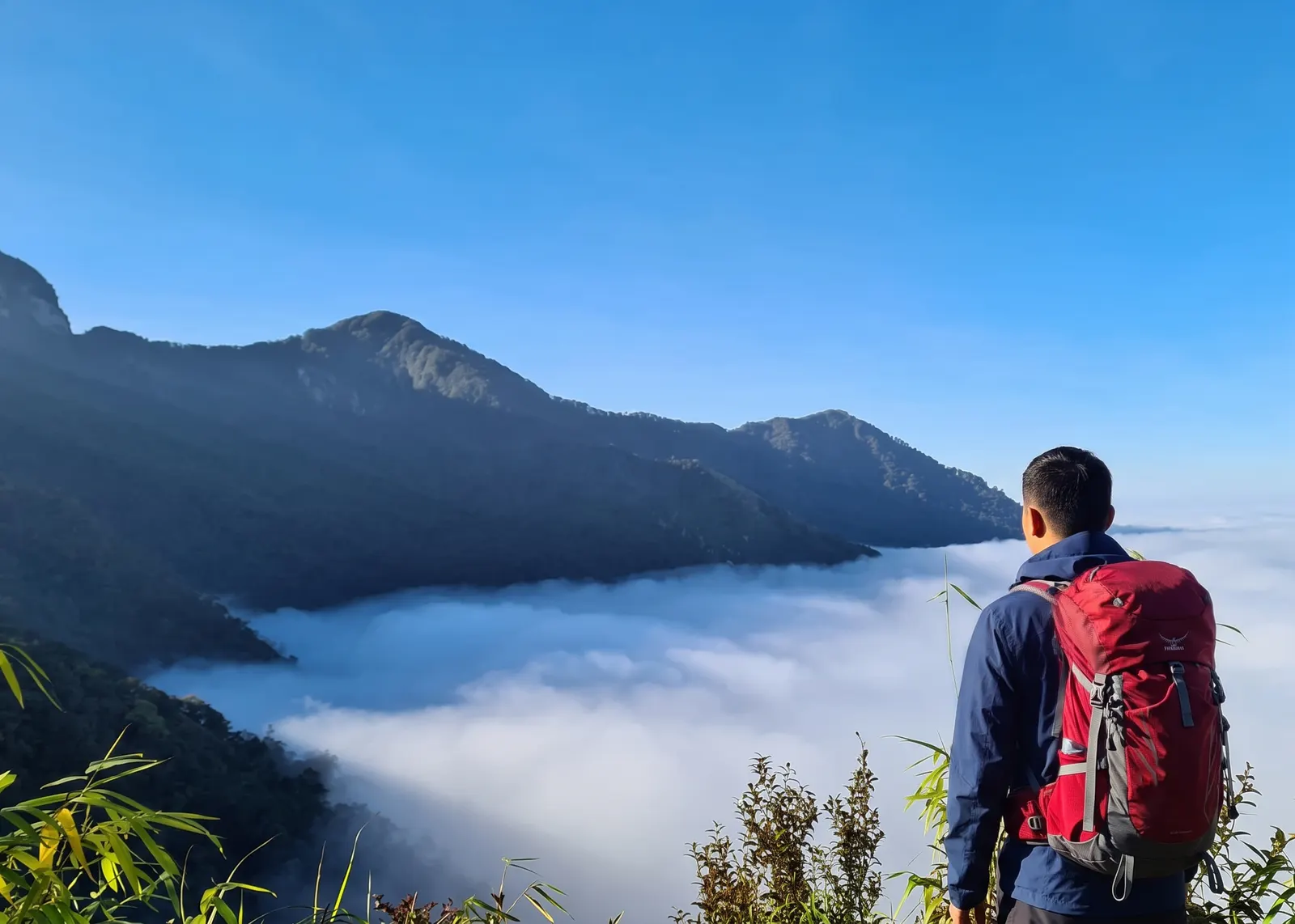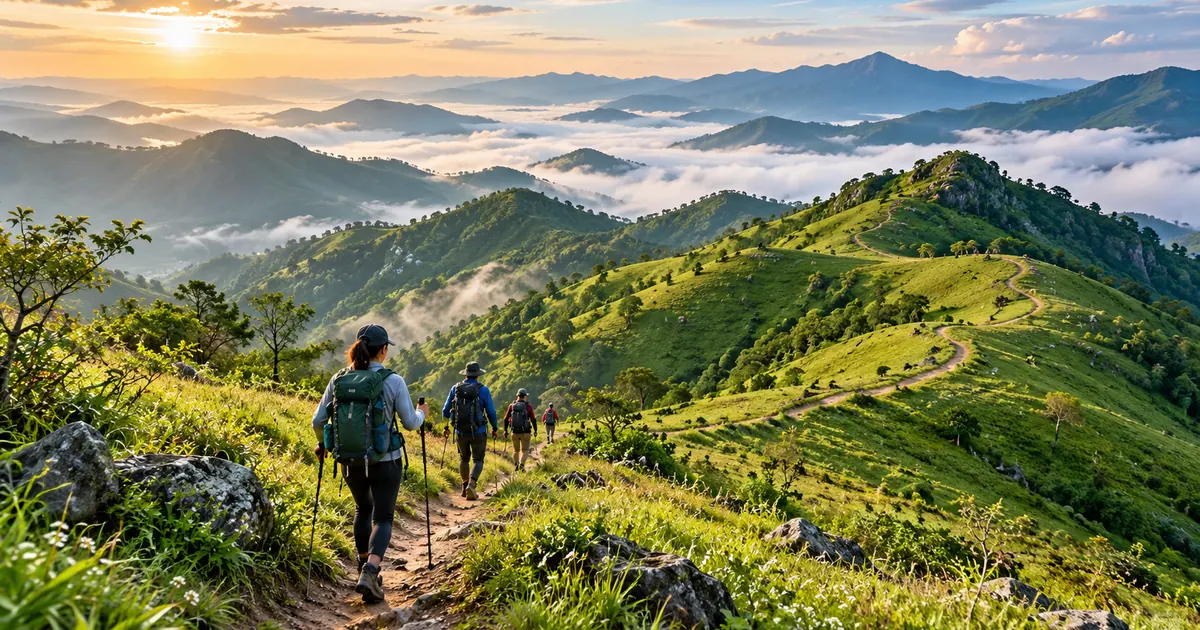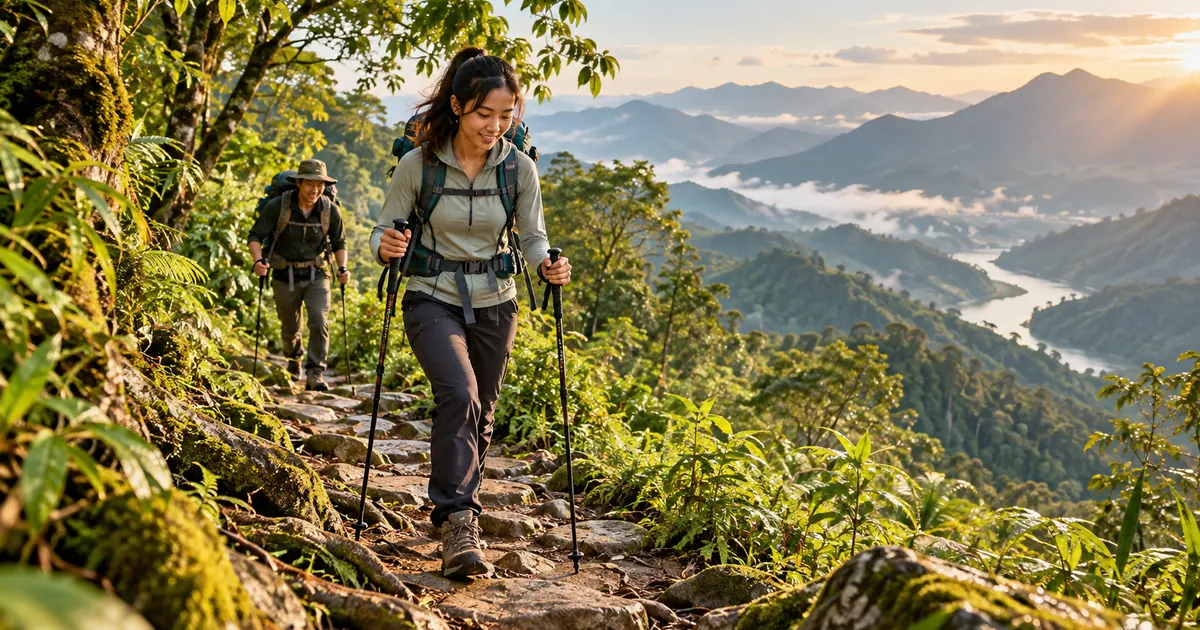
Illustration for this trekking preparation guide.
Pace yourself hiking by choosing an effort you can maintain, adjusting your steps to the terrain and following the group’s coordination. Starting fast is not the goal. You need energy and attention for the end of the day and any stages that follow.
Choose a pace for the whole day
Do not make the person ahead your speed target if that effort leaves you struggling. Tell the leader how you feel early so that the group can arrange positions and stops.
A pace comfortable on level ground may change as the trail steepens or the pack feels heavier. Slowing to match the conditions is part of managing the day. Read the route’s demands and use pre-trip walking to learn your current response.
Let the terrain influence your steps
On a climb, choose manageable steps with identifiable footholds rather than reaching for a long stride. At sections requiring hands or a particular technique, wait for local guidance and maintain the requested spacing.
Do not pull on an untested branch or rock simply because it is within reach. General advice cannot establish the strength of a particular handhold.
On easier sections, keep enough attention ahead to choose your next step. Stop at an appropriate place if you want to use a screen or take a photograph. Read the descent guide rather than assuming downhill is the rest period after the summit.
Rest without losing contact with the group
Follow the agreed stops and communicate when you need another one. Choose a position that does not block the path or require others to pass at a difficult spot.
| Situation | Useful response |
|---|---|
| You went too fast and are tiring | Tell the leader and discuss a sustainable pace |
| You want a photo stop | Choose a suitable place and communicate |
| A shoe rubs or the bag shifts | Stop somewhere appropriate to check the equipment |
| You lose sight of the group | Follow the agreed communication procedure rather than choosing a turn alone |
| You feel unusually unwell | Report it instead of concealing the problem |
Keep the water, food and layers needed between stops accessible. Searching through the entire bag at every break makes the routine harder to manage.
Check equipment that affects your walking
Poles can add contact points when used appropriately, but they do not choose the path for you. Check the locks and placement. Stow them as directed where your hands need to be free.
A well-fitting pack and suitable load also affect movement. Check the equipment before assuming every discomfort comes from insufficient fitness.
Practise on familiar ground
Use the footwear and planned day equipment on a manageable route. Notice the change from level ground to a slope, practise stopping and check access to water. Share useful observations with the organiser.
Will a slower pace inconvenience the group?
Accurate information lets the leader coordinate. Communicating early is more helpful than trying to match the fastest person and becoming exhausted without saying anything.
Apply these checks to Lao Than or Ta Chi Nhu Tram Tau using the itinerary for the selected date.
The National Park Service advises knowing your limits and matching group pace to its slower members. See NPS Hike Smart guidance.