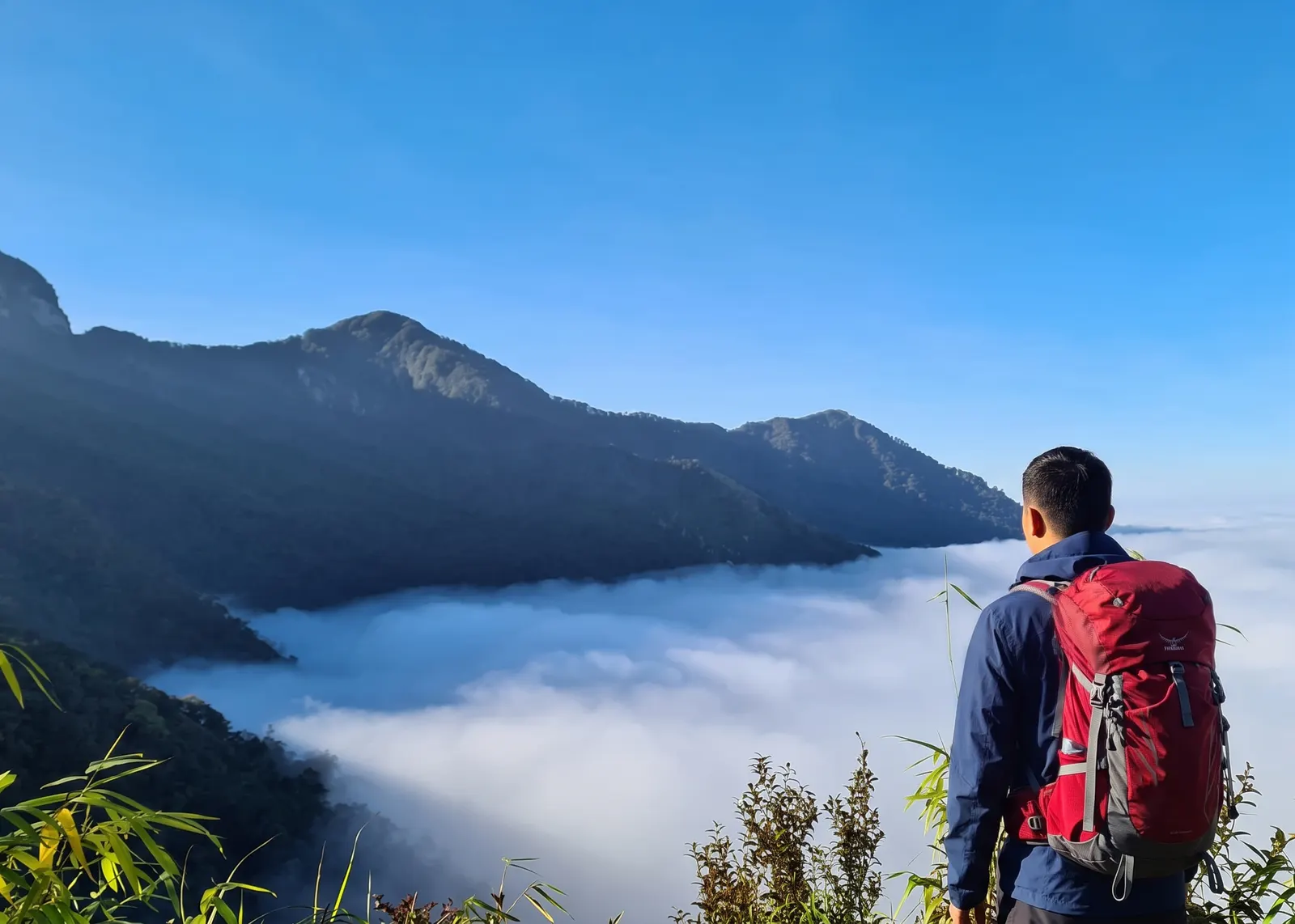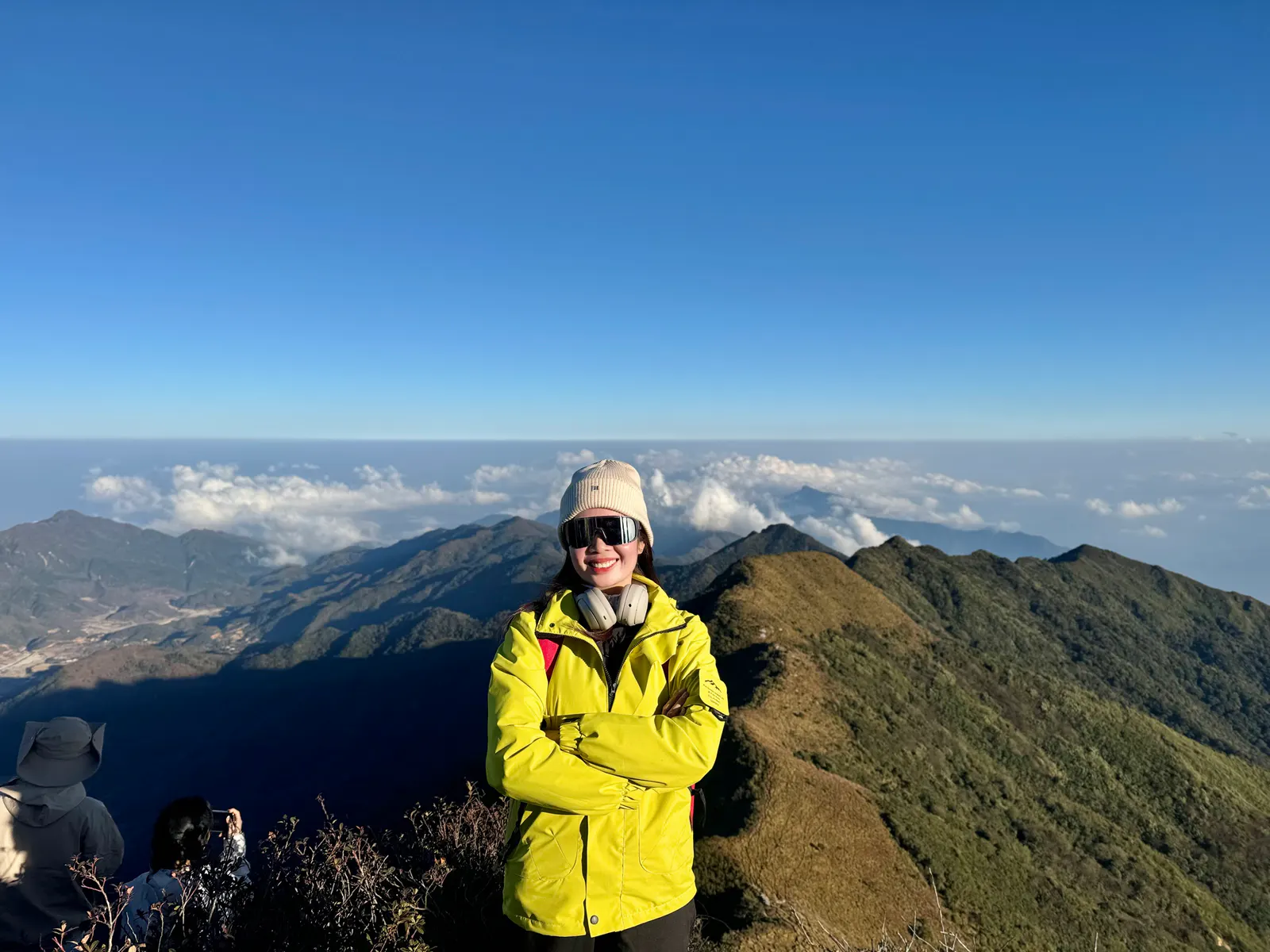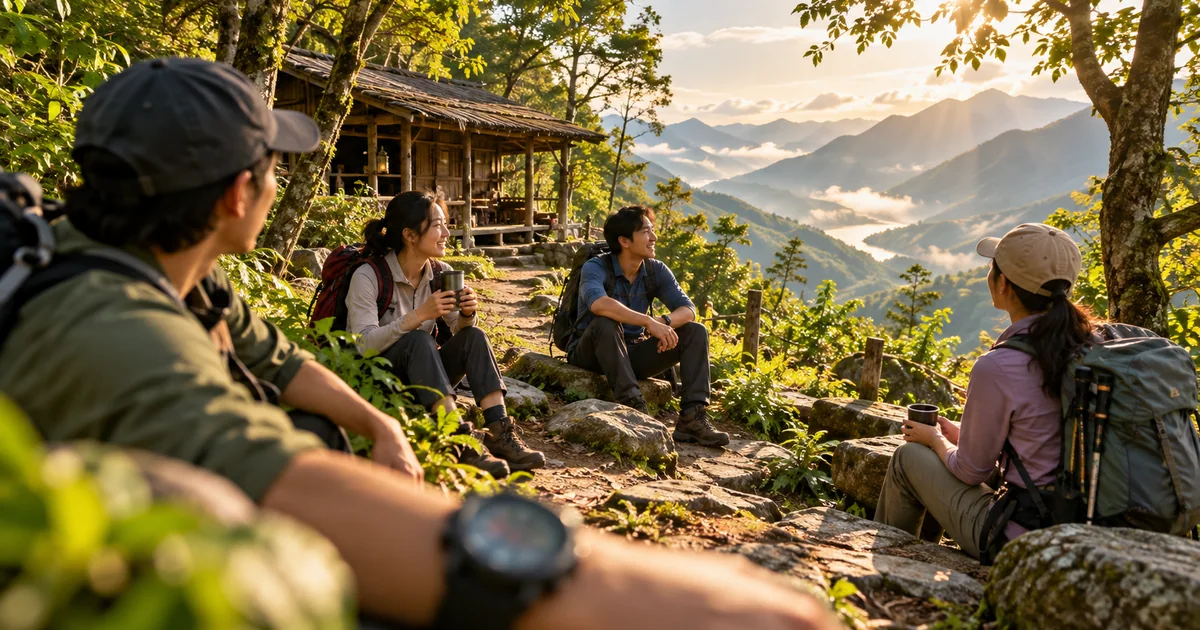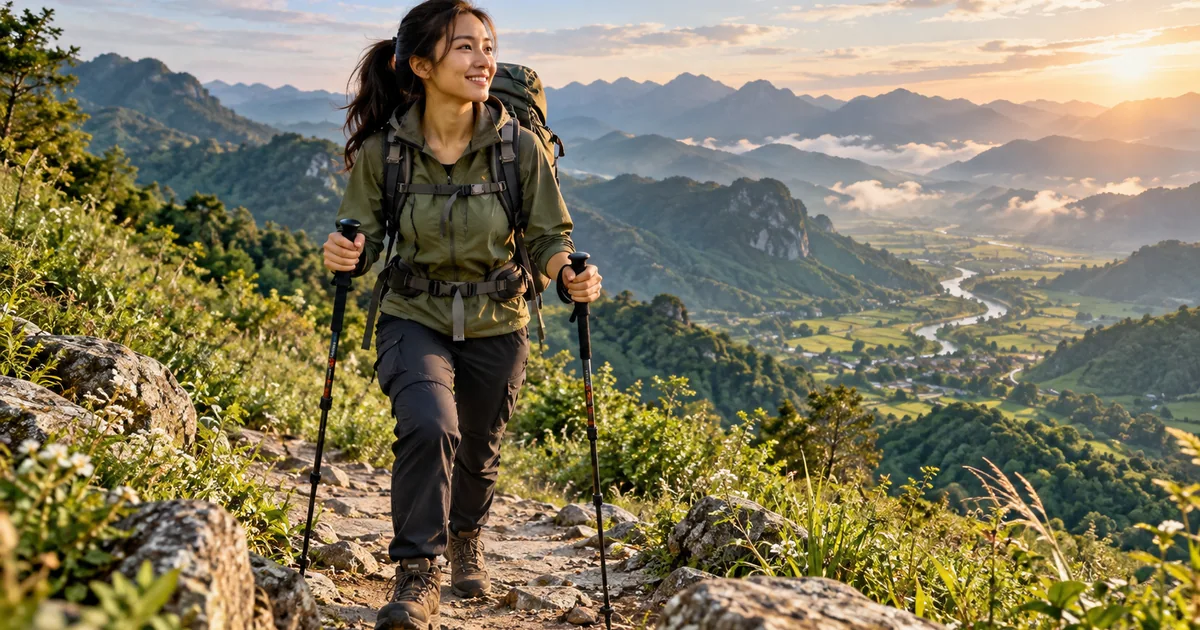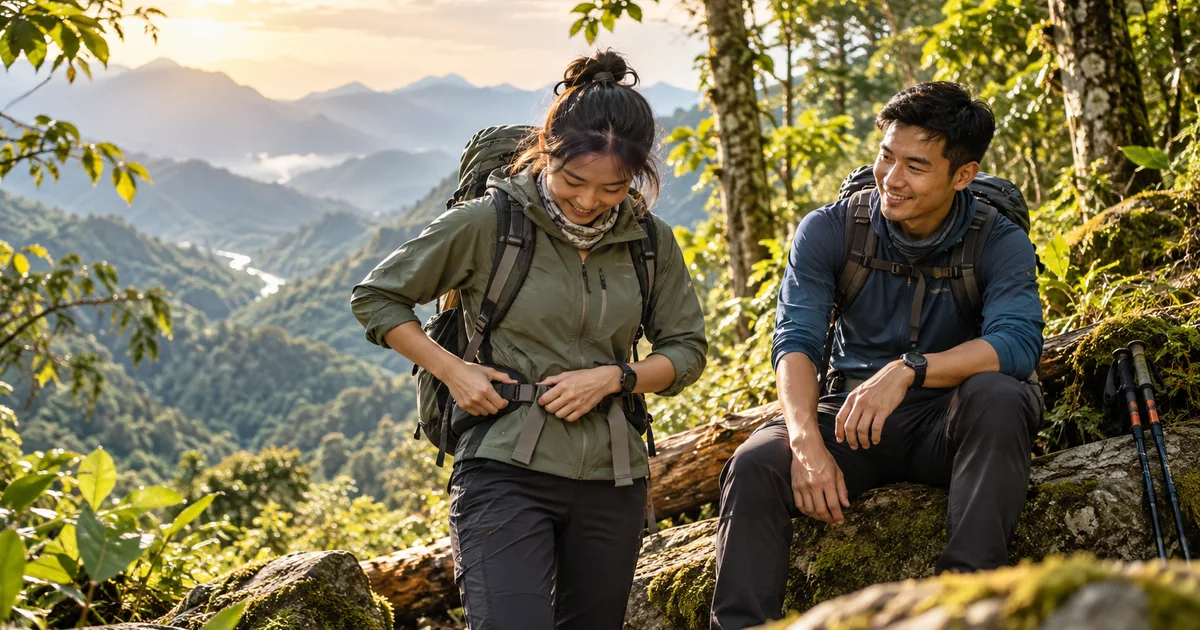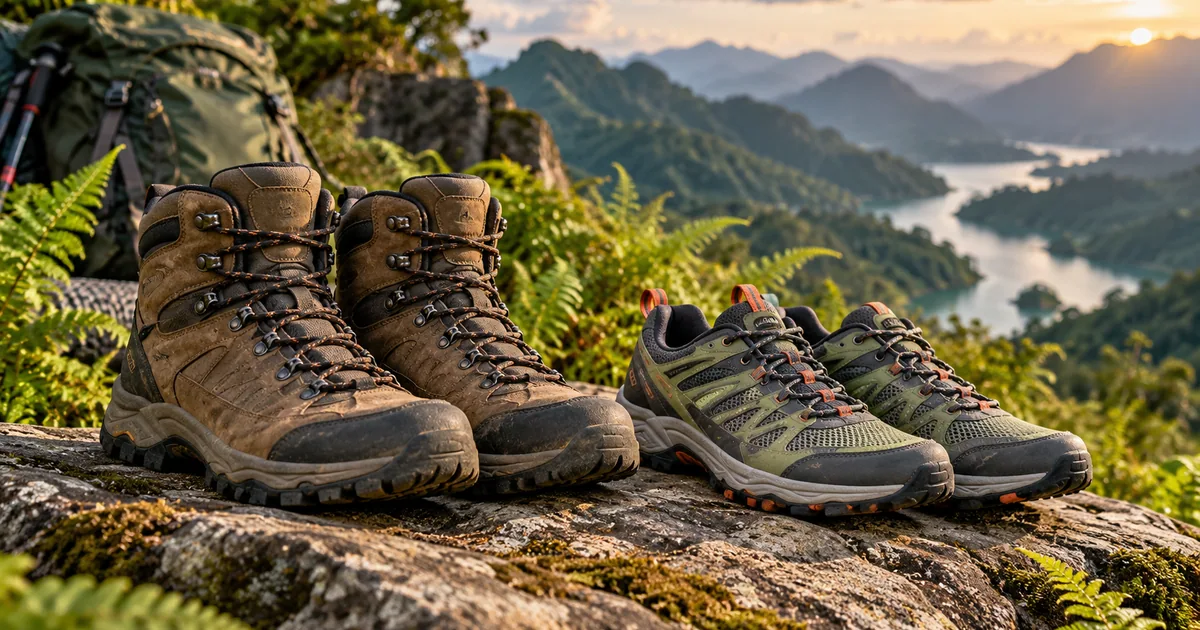
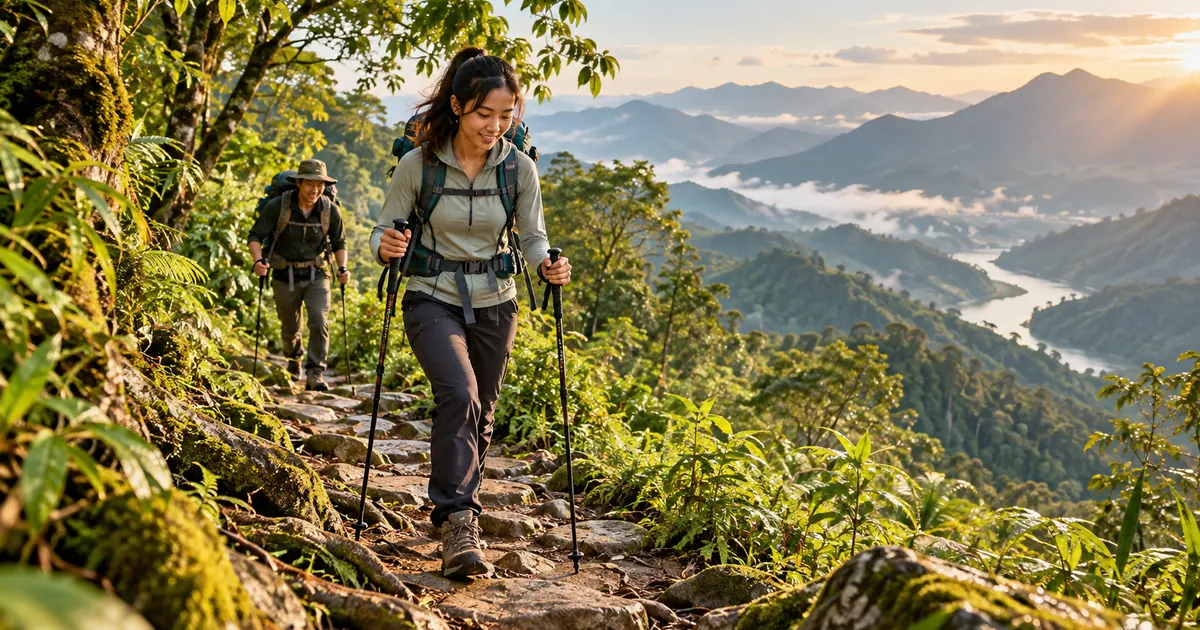
Illustration for this trekking preparation guide.
When hiking downhill, pay attention to footholds, a controllable pace and the fatigue already accumulated. Leaving the summit is not a reason to accelerate automatically. The surface and slope may differ from the approach.
Use general preparation alongside the leader’s instructions for the actual section. An article cannot identify the grip of a rock or condition of a slope on your departure day.
Plan for the return before starting
The descent may come after hours of walking, when concentration and equipment condition have changed. Preparing only to reach the summit leaves out a substantial part of the trip.
Ask which route is used for the descent, how long the stage lasts and where the group rests. Daily walking time helps you separate the summit moment from the whole day.
Choose steps you can control
Look at the surface before transferring weight. Avoid reaching for a distant foothold simply to keep pace. Earth, rock, mud and loose material need different judgement; there is no single stance that settles every descent.
Keep externally attached equipment from swinging or catching other walkers. Check laces and the load before a longer section, and stop somewhere appropriate if the arrangement changes.
Do not take an unconfirmed shortcut or grab something whose stability you do not know. If a section feels beyond your confidence, tell the leader before attempting it.
Check poles, pack and footwear
| Item | Reason to stop and recheck |
|---|---|
| Footwear | Slipping inside the shoe, loose laces or uncomfortable pressure |
| Backpack | Shifting items or a load pulling sideways |
| Poles | A slipping lock or no reliable placement for the tip |
| Pace | Repeatedly rushing to catch the person ahead |
| Attention | Difficulty observing the next step as fatigue increases |
Read pole use and pack fitting. A pole tip on a slippery or loose surface is not automatically a reliable support. Stow equipment as instructed where both hands are needed.
Let the conditions determine difficult-section decisions
Follow the leader’s instructions about order, spacing and support. Waiting while a section is coordinated is part of the trip. Avoid overtaking to save time without direction.
This guide does not teach independent cliff movement, river crossings or injury treatment. Tell the person responsible about pain or unusual discomfort so they can respond to the situation.
Try the equipment before the trek
A familiar manageable slope or stairs with appropriate support can reveal toe pressure or an unstable bag. Begin within your abilities rather than adding a large load to test your limits.
Will a high boot solve downhill difficulties?
Fit, sole condition, movement and the trail all matter. Compare footwear options by the route instead of cuff height alone.
Should I descend quickly to rest sooner?
Keep control and follow the group’s plan. Use the pacing checks and the requirements of Ngu Chi Son if that is your chosen route.