
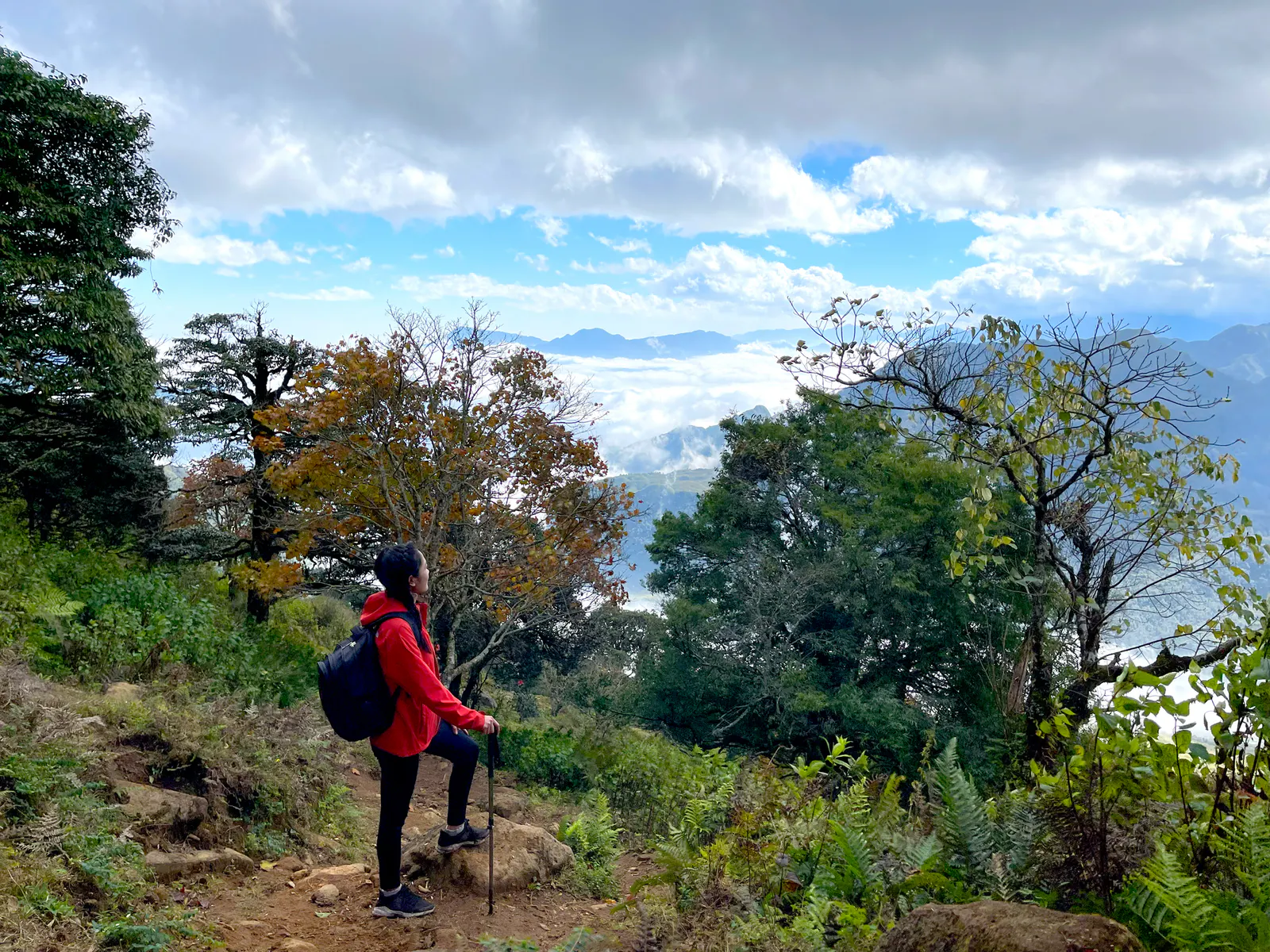
Nhiu Co San calls for attention to slopes and damp conditions. Its two walking days should not be confused with a light outing. A sustainable pace, deliberate footing and staying in contact with the group matter more than speed at the start.
Current route record
| Trek | Walking days | UpTrail difficulty | Recorded summit elevation |
|---|---|---|---|
| Nhiu Co San | 2 | 3/5 | 2,965m |
Walking days exclude the Day 0 approach. Count all overnight stops in the full programme. Difficulty is UpTrail’s internal scale.
Read the full Nhiu Co San programme and the final departure message for the approach and overnight arrangements. Do not combine arrival details from another operator or an old review.
Assess your footing as well as endurance
The source guide describes it as a possible step beyond introductory routes for people prepared for hills. Tell the organiser about experience on uneven or damp ground, not only how long you can walk on a paved path.
If balance, persistent joint discomfort or cold/damp conditions concern you, raise those before booking. Read the rating together with the actual stages.
Forest and mist change how you move
The described scenery moves through forest and more open sections. Mist can reduce the visible distance between members of the group. Follow the stopping and communication arrangement instead of moving away for a separate photograph.
Wet roots, rock and earth can offer different contact. Observe where you step and follow the leader at difficult sections. A pole placed near your hand is not automatically stable support.
Keep attention for the second day
Settle into the first walking stage without overtaking at narrow or slippery sections. Use stops to check equipment and organise the overnight kit.
Have the light and appropriate layers available for an early stage if included. After the high point, the descent still needs concentration. Tell the team when you need help instead of rushing to catch up.
Preparation priorities
- Use familiar footwear and inspect sole condition.
- Protect sleeping clothing, power and electronics inside the bag.
- Test the headlamp and its controls before use.
- Try the planned load and check how it affects balance.
- Keep any personal items needed for clear vision accessible.
Use the preparation framework without treating one exercise or a fixed number of weeks as proof of readiness.
Conditions and expectations
Review recent rainfall and the whole forecast with the local team. A special-looking frost or mist photograph is not a reason to accept conditions beyond your ability or the operating plan.
Is it suitable for a first trek?
A prepared first-time walker can discuss it, but someone unfamiliar with sustained hills should also consider an introductory option.
Can I rely only on the town forecast?
No. Check the location and current trail information. Avoid the common mistake of assuming a short programme removes preparation.



No comments yet. Ask a question or share what you are considering about this trek.